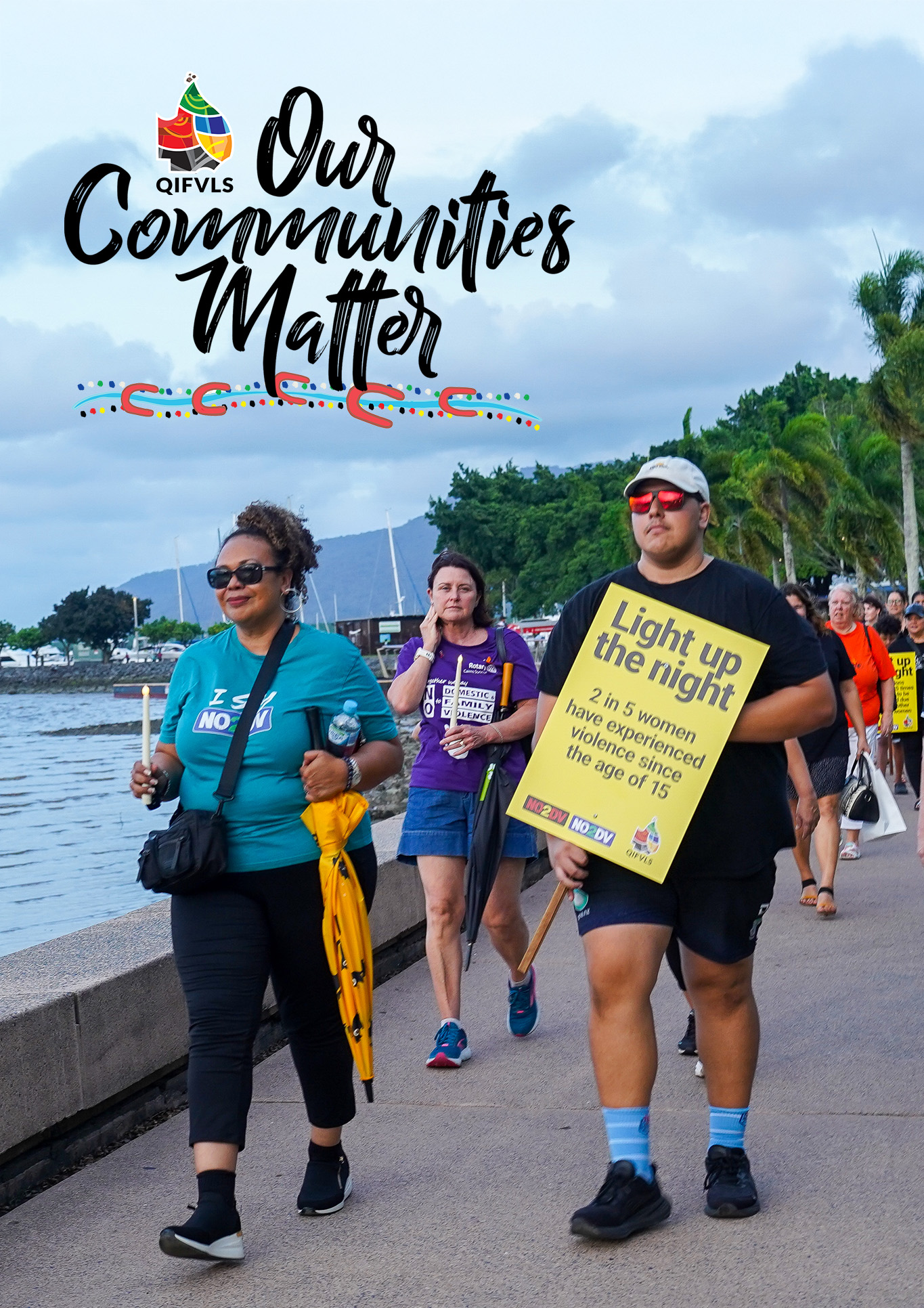



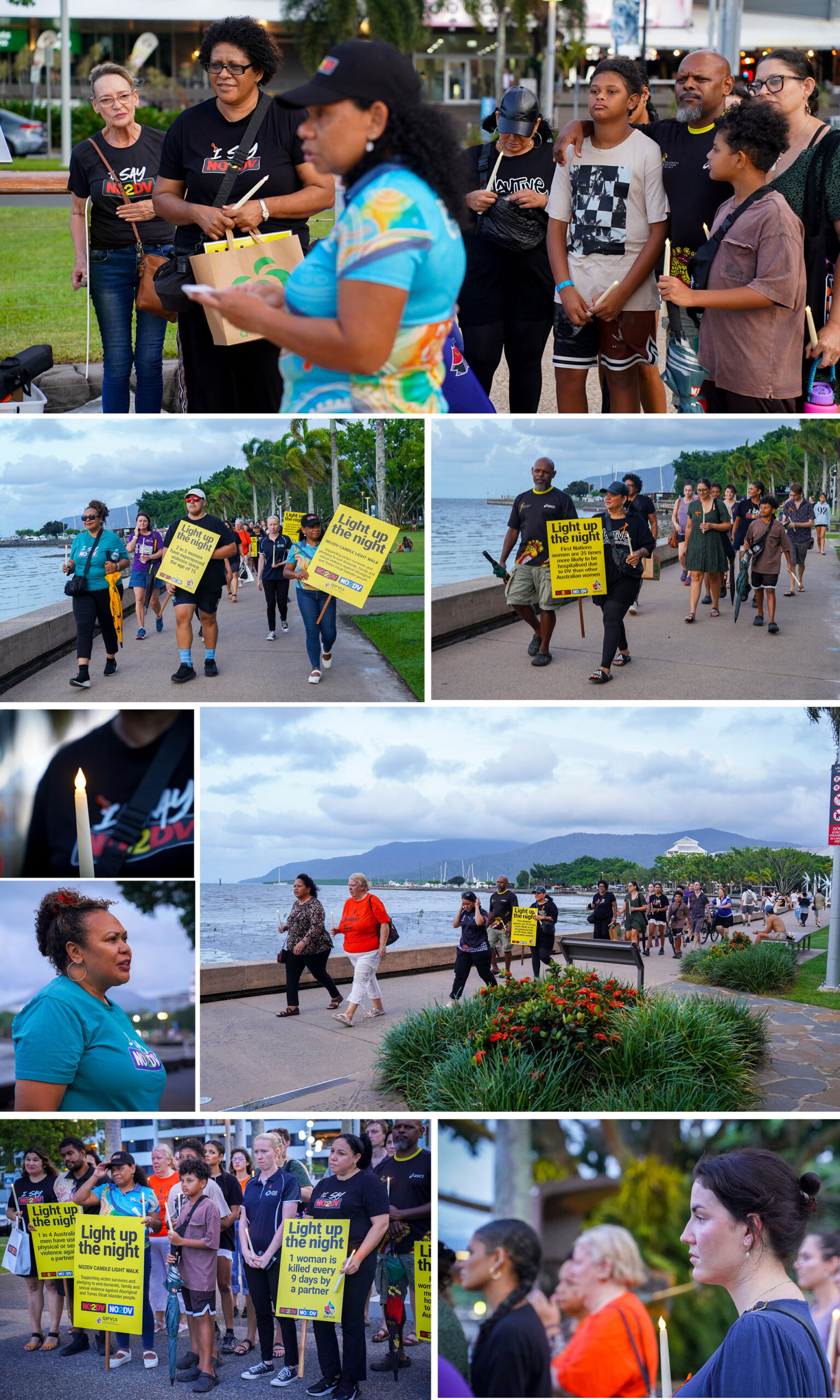
The NO2DV candle light walk was held along the Cairns Esplanade early in the evening of February 19 as part of Ochre Ribbon Week.
The event was supported by members from allied sector organisations, JCU students, the general public, QIFVLS staff and NO2DV Ambassador Nathan Schreiber.
Held under threatening skies (after being postponed in November last year due to heavy rain), the event began with QIFVLS’ CEO Wynetta Dewis providing the Acknowledgement to Country and delivering a few words about the meaning of the walk. Wynetta’s address reminded the group about the urgent need to address the disproportionate levels of domestic, family and sexual violence in Aboriginal and Torres Strait Islander communities. Just some of the distressing statistics mentioned were:
– Aboriginal and Torres Strait Islander women are 27 times more likely than other Australian females to be hospitalised due to family violence
– Aboriginal and Torres Strait Islander women are up to 7 times more likely to be homicide victims
– Between 1989–90 and 2022–23, 97% of Indigenous women victims of homicide were killed by someone they knew. 72% of these women were killed by an intimate partner
– Over half of Aboriginal and Torres Strait Islander people who experience family violence have a disability.
Bearing candles and placards, the attendees walked one of the busiest sections of the Esplanade – attracting the attention of tourists and locals alike.
At the walk’s end, Thelma Schwartz, QIFVLS Executive Director Legal provided the closing remarks, asking the group to reflect on those who have been lost to domestic violence. The walkers were then invited to add their thoughts and insights to a NO2DV comments board.


The Outreach Team and Cairns Service Delivery team hosted an afternoon tea at Jalbu Hub Integrated Women’s Health Services in Edmonton, south of Cairns, where James Davis delivered a Legal Education session on Domestic Violence and Victims Assist.

Brisbane office team members Lily Franklin, Senior Lawyer/Team Leader and Oliver Blythe, Family Advocate Support Worker, attended the Kurbingui Numala Domestic and Family Violence Safety Response team to deliver a Community Legal Education (CLE) session for Ochre Ribbon Week.
They delivered a session giving an overview of QIFVLS’ services and referral pathways, the history of Ochre Ribbon Week, Domestic Violence Order, Police Protection Notices, Police Protection Directions, and Victims Assist Queensland.
As part of the session, Lily and Ollie provided snacks, QIFVLS’ merch bags and ochre ribbons.

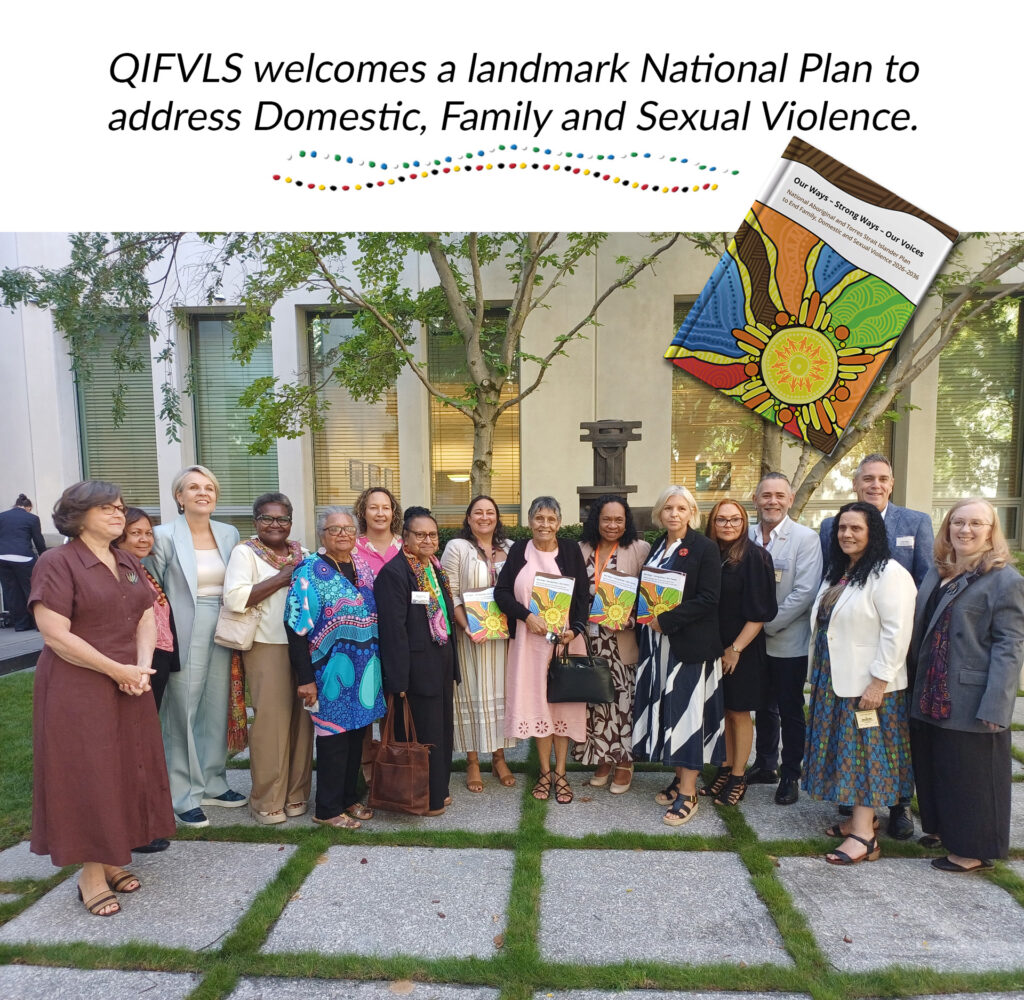
Queensland Indigenous Family Violence Legal Service (QIFVLS) welcomed the Our Ways – Strong Ways – Our Voices: The National Aboriginal and Torres Strait Islander Plan to End Family, Domestic and Sexual Violence 2026-36 (Our Ways) which was launched in Canberra on the 10th of February.
Our Ways is a joint ten-year agreement between the Australian government, state and territory governments and Aboriginal and Torres Strait Islander peoples. It was driven by Aboriginal and Torres Strait Islander peoples and sets out the strategic, long-term priorities to live free from violence, and supported by safe and strong families and communities.
For years, National Aboriginal and Torres Strait Islander people have been calling for a national, coordinated plan to address the grossly disproportionate levels of domestic, family and sexual violence experienced in their communities.
QIFVLS’ CEO, Wynetta Dewis was a member of the First Nations National Plan Steering Committee that provided key recommendations to the Plan, saying “Today’s launch of the Our Ways, Strong Ways, Our Voices – First Nations Safety Plan is a significant milestone and reflects the leadership, knowledge and lived experience of First Nations communities. As a member of the Steering Committee, I’m proud of genuine collaboration that has shaped this plan – one that has shaped this plan – one that centres culture, community-led solutions and shared responsibility for safety. This is an important step toward safer futures for our people.
“The launch of the Our Ways, Strong Ways, Our Voices – First Nations Safety Plan marks a critical step forward in community-led safety. As a Steering Committee member, I’m proud to support a plan grounded in First Nations voices, partnership and practical action.”
At the launch, Minister Plibersek announced $218 million in new funding over four years as an initial response to the plan’s launch.
While this investment is a positive step, a long-term funding arrangement is essential to ensure the continuity and effectiveness of services required to address violence in our communities, particularly in the context of longstanding underinvestment in the underlying drivers of social injustice
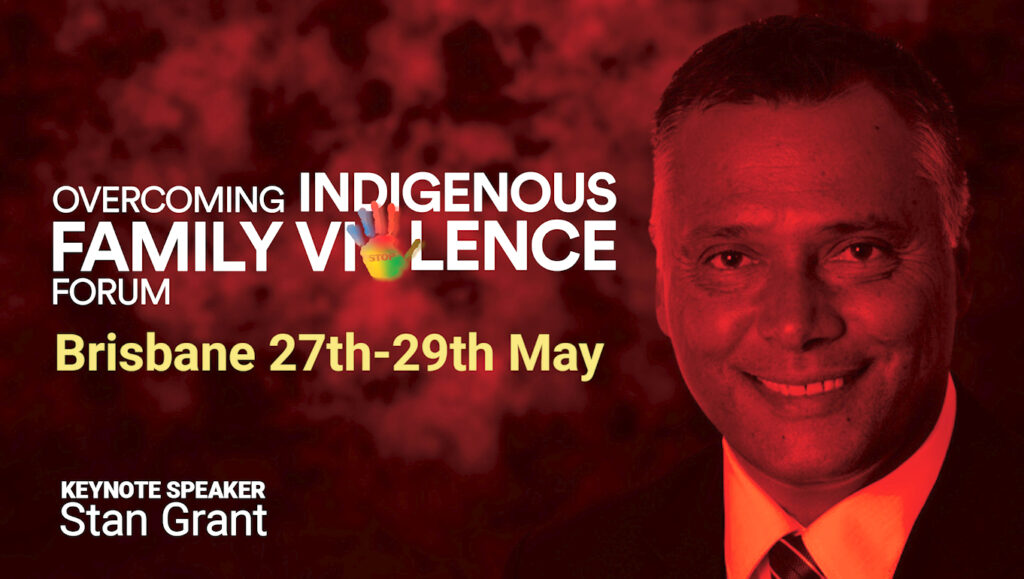
QIFVLS is proud to announce the return of the Overcoming Indigenous Family Violence Forum. The 2026 theme ‘Our Way, Our Changemakers’ is a tribute to the continuous hard work put out by our community leaders and ACCO sector who are fighting tirelessly to achieve real progress towards Target 13 of Closing the Gap.
To ensure we are supported in this fight for real change we must continue to demand for sustained funding, resources, and support for First Nations community-led solutions that have the cultural knowledge, lived experience, and expertise to create lasting change.
Significant developments have occurred in the Indigenous family violence sector. We continue to witness the emergence of community-driven initiatives that prioritise cultural healing, early intervention, and support for families and individuals experiencing violence. Increasingly, Elders and cultural leaders are recognised as key agents of change, and collaboration between governments, service providers, and First Nations communities has strengthened.
It is with this momentum that we look ahead to the 2026 Overcoming Indigenous Family Violence Forum; a platform for knowledge exchange and community connection; a place where we, the changemakers, are heard.
Together, we hold the solutions to create safer, stronger, and healthier communities. I look forward to welcoming you all in May to what will be another powerful gathering and celebration of, resistance, resilience and our collective cultural strength.
Wynetta Dewis
QIFVLS CEO
Watch the teaser video here

In this month’s Blakchat, Noeleen Selke, QIFVLS Business Development Manager yarns with Elliejean Singh, our Case Manager Practice Manager / Cultural Advisor. In this 13 minute podcast they discuss QIFVLS’ strategy to prioritise listening to community needs before designing programs, how community voices shape programs across diverse regional communities and how our Outreach and Engagement Advisors plan to build relationships with community stakeholders.


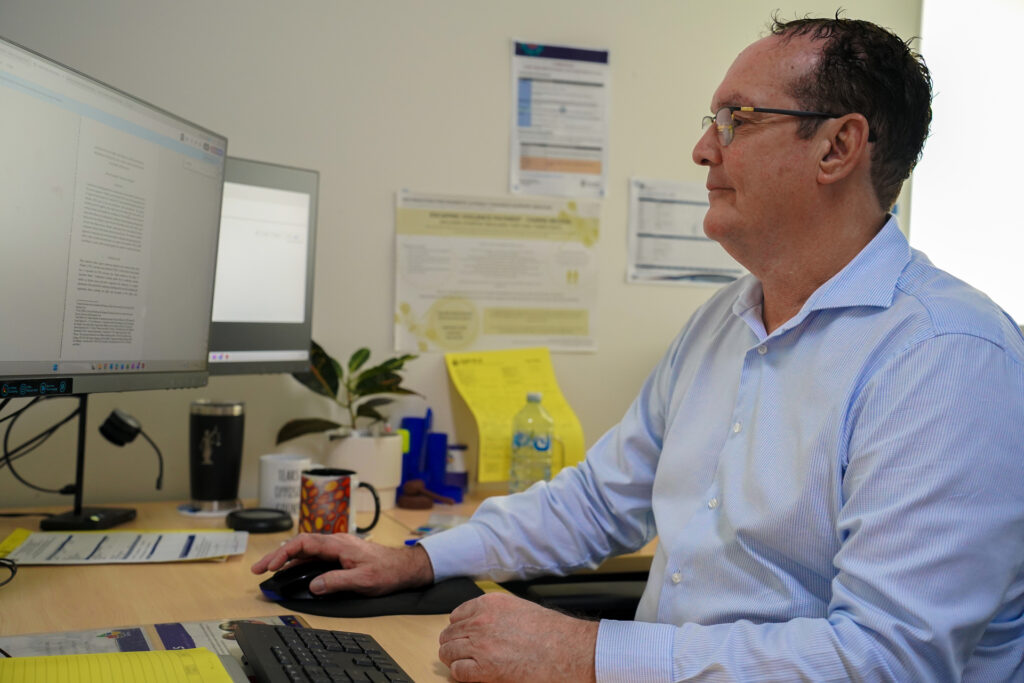
Congratulations to Cairns office solicitor, Mike Roberts, on the recent publication of his research paper, Sentencing Outcomes for Female and Male Sexual Offenders in Queensland: Advocating for Nuanced Matching Protocols.
Outside his many QIFVLS commitments, Mike has devoted the last 12 months to completing his paper, which will be a valuable reference for law students and academics.
Much of the existing literature contends that there is gender bias at the hands of the judiciary when sentencing female sexual offenders. These studies typically only match offenders by sex, the listed name of the offence, and sentencing outcome. However, Mike’s paper argues that without rigorous matching protocols there is no evidence base for studies contending gender bias at the hands of the judiciary when sentencing female and male sexual offenders to terms of imprisonment. The rigorous matching protocols applied in Mike’s study were more nuanced than those used in the existing literature. Mike’s study included the circumstances of the offence, not merely the listed name of the offence or its classification, in addition to other mitigating and aggravating factors including the offender’s age at the time of the offence and sex, the victim’s age at the time of the offence and sex, offender’s relationship to the victim, number of victims, cooperation with law enforcement agencies, and guilty plea.
Mike’s paper argued that even with rigorous matching protocols, commentators asserting gender bias in sentencing outcomes should also acknowledge that the instinctive synthesis approach to sentencing does not permit judges to mathematically calculate the penalty and attribute weight to mitigating and aggravating factors. This makes it impossible for any study to quantify specific differences in sentencing outcomes to contend gender bias at the hands of the judiciary when comparing differences in sentencing outcomes between female and male sexual offenders in Queensland.
The detail, context and background included in Mike’s paper will provide academics and researchers with a far more balance perspective on different sentencing outcomes for offences that may have appeared similar from the listed name of the offence and sentencing outcome. The results have presented a counterargument to claims of judicial bias.
Mike’s paper began as his honours thesis when he was as a third-year university student and research assistant to criminal law professor, Kelley Burton. Towards its completion, he was asked if he’d like to publish it.
To make time for his research, Mike devoted his evenings after finishing work at QIFVLS each day, which included during his trips away on circuit.
In its final form, Mike’s paper was distilled to 8,000 words.
Well done Mike!

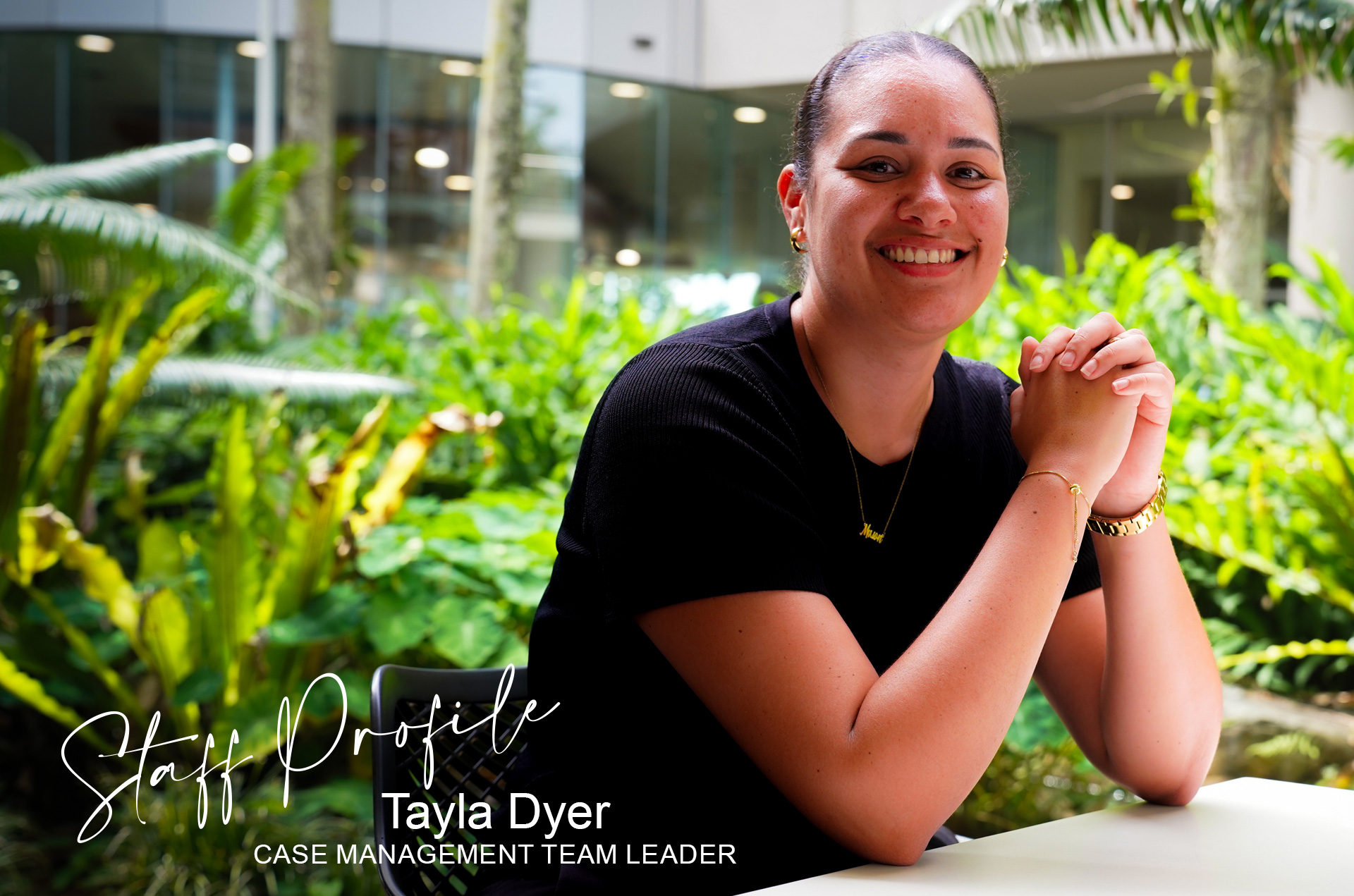
OCM: So perhaps we just start with your upbringing, and where you were born and raised.
Tayla: I was born in Rockhampton but raised in Blackwater – a little mining town two hours west of Rocky. I was raised by my mum, a single mother, and we lived with my nan and pop. I also have a brother, Carlin, who’s two years older.
We lived together in a three bedroom home, and I shared a room with my mum throughout my childhood.
I didn’t grow up with my dad, but about four years ago I reconnected with him.
OCM: How did that come about?
Tayla: I’d always wanted to. My mum is non-Indigenous but my dad is Aboriginal / South Sea Islander, and I just felt like I was missing out by not knowing his side of the family or feeling connected to culture.
OCM: Did you find it a challenge to track your father down?
Tayla: No, it was easy. He lives in Darwin with his wife and my two half-brothers, but his family are all in Rockhampton. I more or less knew his extended family and got in contact with one of the aunties, who then got me in contact with him.
OCM: How was your dad about you coming back into his life?
Tayla: Oh, happy, really happy. When we first spoke over the phone it was like we’d known each other all our lives. It was a little nerve wracking for me to start with because I wasn’t sure how it was going to go, and I only knew mum’s side of the story. My intention was simply getting to know him, to not compare stories. I wanted to start afresh and get to know my family and my culture on that side.
He was already planning a trip to Rocky for Christmas, so a few months after our first phone call, we finally met in person.
A little later I flew to Darwin for a holiday, with plans to move there permanently. And while I did relocate later in 2023, pregnancy complications forced me to return to Rockhampton within just a few months.
OCM: If we could just back-track a little, tell us about your schooling years. Were you an academic kid or did you love your sport?
Tayla: I played touch football in high school from Grade 8 up to Grade 12. I had my own touch team, called the ‘Too Deadlies’. My brother had a team as well, called ‘Black Magic’.
I wouldn’t say I was naughty in high school, but I was a bit slack. When I was younger, actually wanted to be a doctor, or even a surgeon, but I just didn’t have that push or guidance at school in Blackwater.
I was offered a school-based traineeship with the railway in Bluff, just outside of Blackwater from Grade 11, doing admin. I realised I had a knack for administration so I just kept doing it.
After graduating Grade 12 it took half of the following year to secure a job – a contract role with Aurizon in Gladstone, with which I did for about nine months. They offered me a full time role there, but I just couldn’t see myself living in Gladstone so I transferred back to Rocky, doing contract work with them for a while.
Then I worked with Ergon at their call centre for a few months, which was followed by a period on Centrelink when I did a Diploma of Business Admin online with CQU.
Early in 2017 mum sent me a job ad for an Admin Officer role with QIFVLS in Rocky. She worked at the high school in Blackwater and knew Aunty Bino (a longstanding QIFVLS staff member).
Happily, I got the job and started working with QIFLVS in Rocky as the Admin. Within a year I moved from Admin to Legal Support Officer and then as QIFVLS’ first Case Management Officer (CMO). Aunty Bino really designed this role, so my position at the time was a bit of test case.
I was doing the CMO work, legal support work and the Outreach. And as the role become more defined, I ended up training both the existing and new CMOs in case management, and developed the training material as well.
OCM: Obviously as part of your role you are exposed to some traumatic stories. How do you manage that?
Tayla: I’m big talker, so I always debrief with my team. Towards the end of the day, I’ll sit down to talk with someone – and that’s my way of leaving it at the workplace. I’m also big on self-care, and make sure that I stay physically and mentally healthy to be able to support my clients.
The beach is my happy place, my safe place. So if I am exhausted or overwhelmed, I’ll jump in the sea. That’s my way of cleansing my soul.
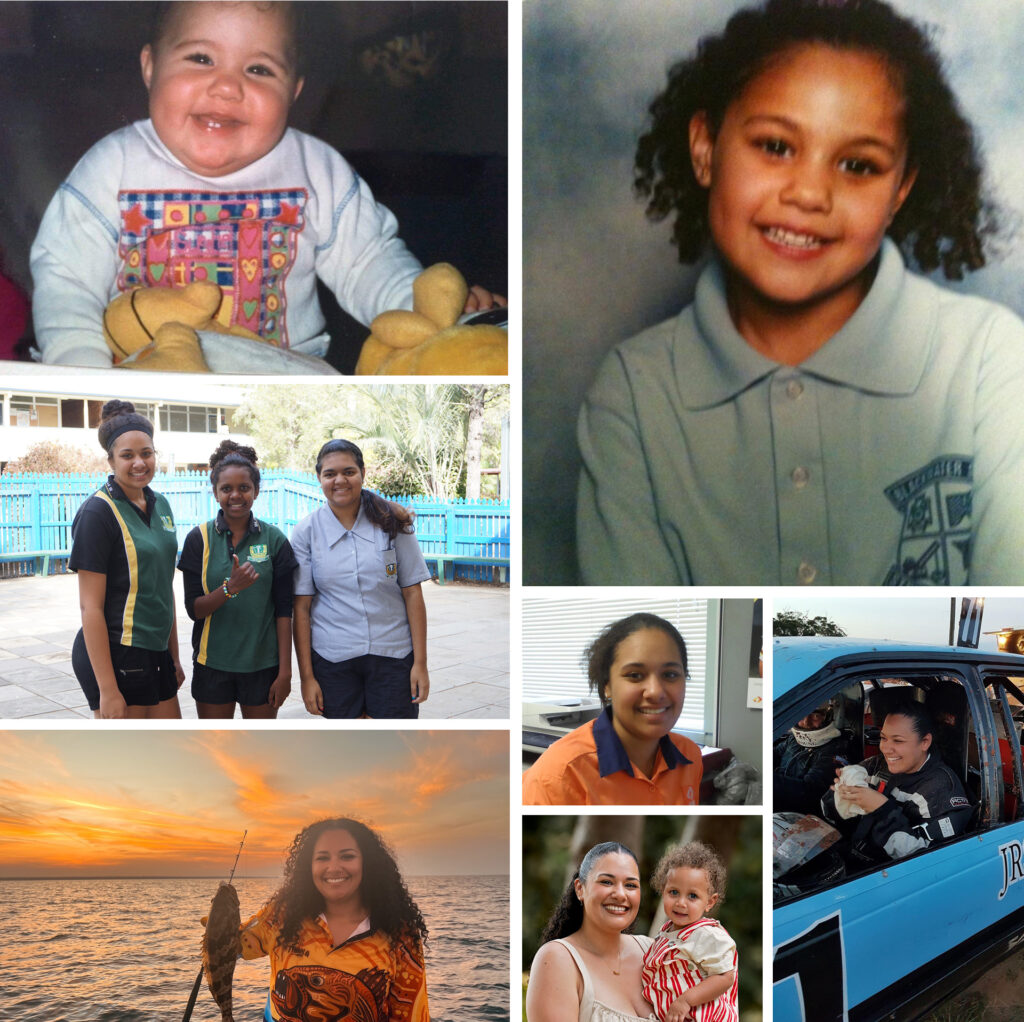
OCM: What about your hobbies and interests?
Tayla: I try to spend as much time as can with my young fella, especially now I’m back at work. I could probably name off a whole heap of hobbies and interests before I had my son. I used to have a photography business for about a year, photographing families, maternity, couples, newborns.
I also love fishing. It’s probably the only thing I have patience for. I can just sit there all day, even if I’m not getting a bite.
OCM: So you started at QIFVLS in 2017 but I know you left for a while.
Tayla: I finished in October 2022 and went to do intensive family support with Act for Kids. Going from an indigenous organisation to a non-Indigenous organisation was a big change for me but it was really good because I was working with the whole family – including the victims, the perpetrator and the children.
I moved into that space because at the time QIFVLS Case Management Officers were still heavily legally-based, whereas my passion is working with the whole family and getting into the nitty gritty of creating their case plan, understanding their journey and supporting them to stay out of the child safety system.
It was also my first time working with people from multicultural backgrounds. One my first families was Egyptian and I was really nervous it, because I didn’t know the services that were available to support them. Was there going to be a communication barrier? But I was very lucky that my client was just this happy, bubbly, gentle soul. And I think that just made it so much easier for me to support her.
Even though I was only there for a short period of time, I learnt so much. And I also made amazing friendships at that workplace and learnt a lot more around specialist domestic violence work.
I finished up there in August 2023 with a plan to move to Darwin where I had job lined up with the Red Cross women’s domestic violence shelter, working in crisis support.
I found out that I was pregnant the morning the removalist came to my house in Rocky. It was a lot. I had sold my house, I was was pregnant but I was like, “Okay, I’ll be right”, so off I went to Darwin.
As it happens, I was only up there for about three months because my ex at the time left, and I was just too sick to work, plus Darwin rental prices are so expensive. So yeah, I ended up coming back home to Rocky in January 2024 had my son Mason in May.
I’d stayed in contact with a lot of the QIFVLS staff after I left and was yarning with Andrew Adidi (QIFVLS Outreach and Community Engagement Advisor) a year ago and mentioned that I’d always wanted to come back. So Andrew told Aaron (Luki, Director Legal Practice), who was straight on the phone to me.
With the exciting new structure and growth happening at QIFVLS, I put in my expression of interest for the Case Management Team Leader role and here I am back again, in that position. It’s a big step in my career, because I’ve always wanted to get into a leadership role.
I’ve got a team of four currently. Two are in Brisbane, there’s two in Cairns, and we’re recruiting for one in Rockhampton. There’s also the existing Case Managers embedded with the Cairns legal team as well.
OCM: How is this different from the previous Case Management Team model?
Tayla: The I guess the difference now is that we, we can advocate a lot more. And support the client to become a bit more independent, to address any of those non legal needs.
OCM: Thanks Tayla.


When an individual or organisation makes a tax deductible donation to QIFVLS, they can be confident that their funds are going towards making a tangible difference to the safety and welfare of Aboriginal and Torres Strait Islander people experiencing or at risk of domestic and family violence.
Our team are grateful for all donations that help our not-for-profit organisation to continue offering this critical service. Donations of $1,000 or more help fund outreach services to some of Queensland’s most remote ATSI communities.


Are you in search of a rewarding profession that will take you on journeys through the breathtaking landscapes of Queensland? One that promises not only career advancement and skill enhancement, but also attractive perks, substantial travel allowances, and one-of-a-kind professional adventures? Are you drawn to a career that enables you to make a positive difference in the lives of others?

Look no further – your new career awaits you! At QIFVLS, we are dedicated to combating Family and Domestic Violence within Aboriginal and Torres Strait Islander Communities. Our methods encompass education, advocacy, legal reform, court support, and casework assistance. By focusing on early intervention and prevention, our aim is to empower individuals impacted by Family Violence to regain control over their lives. We are in search of outstanding and dynamic individuals who can join us in achieving this mission.
If you envision yourself fitting into this scenario, we encourage you to see what’s available here.