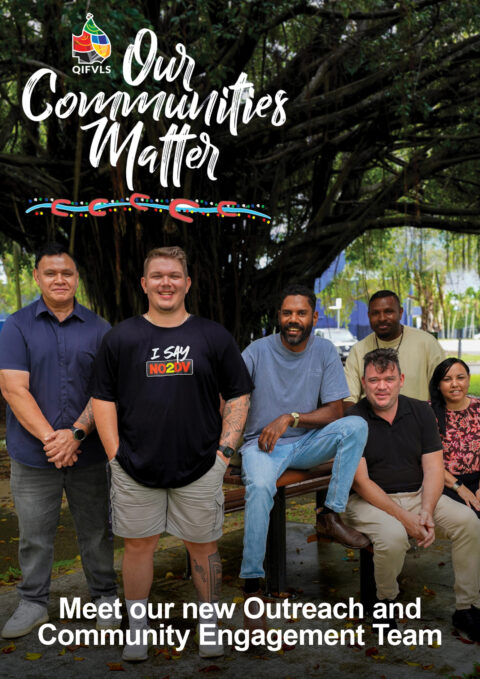


In January, QIFVLS proudly launched a new service division, the Outreach and Community Engagement Team.
This new team will augment our legal and case management arms by providing a consistent presence in community – delivering education around domestic and family violence.
The Outreach and Community Engagement Team launched with a crew of six staff.
Led by Phillip Jose (PJ), the Cairns team includes current QIFVLS staff members Andrew Adidi and Kylee Fogarty, and were joined by Kaleb Mabo late last year. Team members are referred to as Outreach and Engagement Advisors, or OEAs.
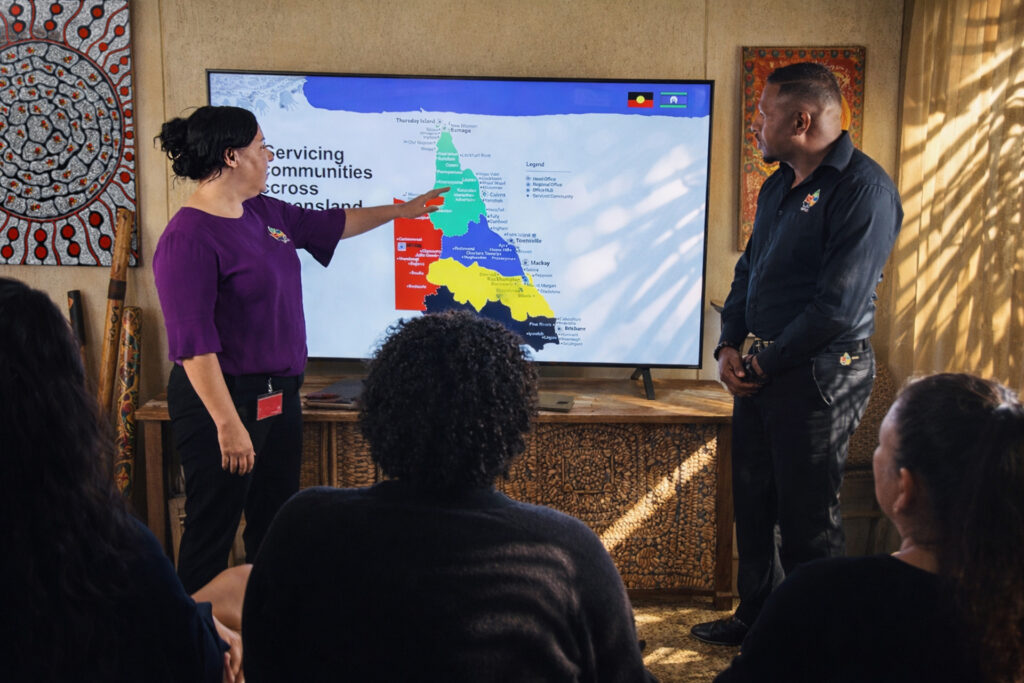
The Cairns office will service communities in the east and west sides of the Cape, the NPA, the Torres Strait and Outer Islands, Cairns and Townsville.
Brisbane-based OEAs include Henry Leafa and Jesse Flanagan, who will service communities across south-east Queensland.
Nardia Luff, based in our Mount Isa office will be servicing Queensland’s outer western and Gulf communities.
Overseeing the Outreach and Community Engagement Team is Elliejean Singh, based in Cairns, who will ensure correct governance protocols are met.
As the team builds, additional regions will be added.
According to each stakeholder or ACCO’s requirements, the Outreach and Community Engagement Team will travel to their community and present with a flexible format. Presentation styles can be tailored to whatever approach is most suited to a community – from more formal group presentations to yarning sessions and even one-on-ones. The venues options can also be flexible, with the team delivering out on country, on camps, at schools or wherever communities or organisations see the need.
Given that QIFVLS is most widely known throughout Queensland for its delivery of legal services to Aboriginal and Torres Strait Islander people, it is inevitable the Outreach and Community Engagement Team will be asked questions about these legal matters.
Asked about how the team handle these questions, PJ said, “The Outreach team can’t offer legal advice but we will walk alongside community, build relationships and provide a conduit to the broader range of QIFVLS services.
“At any presentation, we always start by talking about the broader structure of QIFVLS and reference our core businesses, which is in the legal space.
The legal questions are always going to come up. What we can offer is a warm referral through a phone call or an email with the right lawyer. Similarly, we can offer referrals through to QIFVLS’ Case Management Officers and Family Advocacy Workers.”
As word has spread through communities about the new Outreach and Community Engagement Team, invitations have flooded in. Most recently, PJ in the Cairns office team was invited to join the Cairns Collective Impact Group for Domestic and Family Violence. This group is comprised of a broad range of DV services, including the Department of Housing and Ruth’s Women’s Shelter.
PJ noted, “We aim to strengthen our families, which in turn strengthens the communities we service. We will be walking alongside communities and achieving outcomes, rather than delivering simply presenting to community and expecting them to listen. That’s been a real core part of the work”.


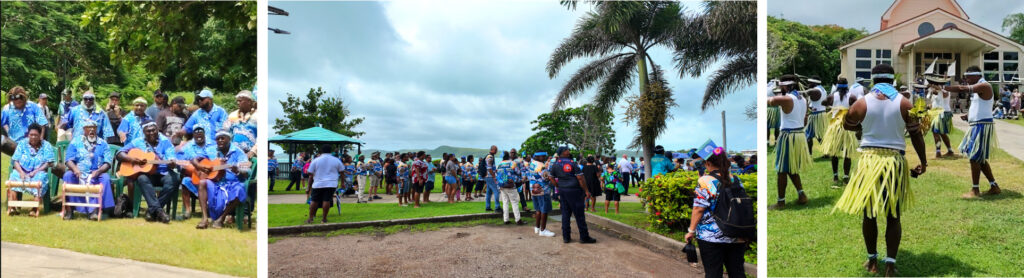
The 90 Year commemoration of the Maritime Strike on Thursday Island in January was a powerful reminder of the strength, courage and unity of Torres Strait Islander workers who stood up for fairness and self‑determination. The QIFVLS Outreach team joined key community members to gather on Country and honour this significant moment in Torres Strait Islander history.
It was almost a century ago that the call of the “bu”, or trumpet shell, controlled the lives of those across the islands of the Torres Strait.
Once used by chiefs to call men to battle, the bu, as it was known, became a tool of oppression.
That was, until January 1936, when Torres Strait Islanders decided they had had enough of the discrimination they suffered working on pearling boats.
They went on strike.
Back then, the Queensland Government Protector controlled the lives of Torres Strait Islanders, dictating where they could go, how they worked and how they got paid.
For most, that work was in the pearling industry.
The Torres Strait supplied much of the global demand for pearls, and the industry employed most of the archipelago’s workforce.
While some Islanders worked on so-called “master’s boats”, owned by European or Japanese pearlers, many were employed on “company” boats controlled by the Queensland Government Protector.
The company’s boat system was restrictive and paid lower wages.
In many cases, they did not receive cash but credit that could be spent only at designated government stores.
Owners wanted to boost production on the company boats, but their oppressive approach sparked a revolt with ramifications far beyond pearling.
By January 1936, the Torres Strait Islanders had enough.
When one owner went around trying to sign up workers for the company boats, Torres Strait Islanders refused, jumping out of meeting hall windows in protest.
The strike made headlines in the Cairns and Brisbane newspapers, and after nine months the nightly curfew was scrapped, and Torres Strait Islander pearlers were given more pay, control of their own boats and more freedom to travel between islands without the need for permission.
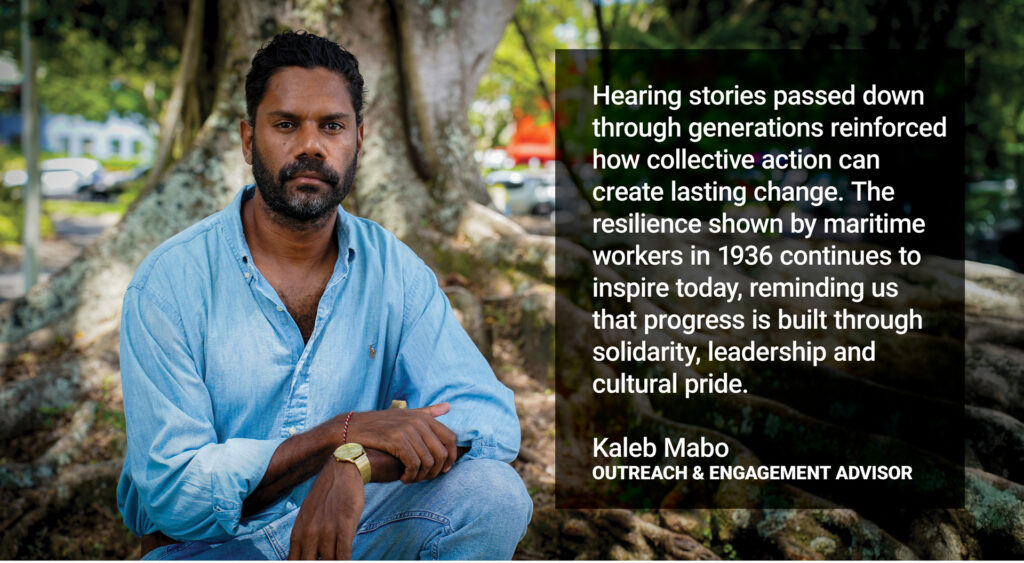
QIFVLS OEA, Kaleb Mabo, who attended the ceremony said, “The sentiment of the day was marked by deep emotion, reflection and pride. Being present on Country, alongside Elders and community, made clear that the strike was not only about labour conditions, but about dignity, voice and the right of Islander people to shape their own futures. There was a strong sense of respect for the sacrifices made and the courage shown by those who led the movement.
“Hearing stories passed down through generations reinforced how collective action can create lasting change. The resilience shown by maritime workers in 1936 continues to inspire today, reminding us that progress is built through solidarity, leadership and cultural pride. This commemoration was both a tribute to those who came before us and a call to carry their legacy forward with respect and responsibility.”


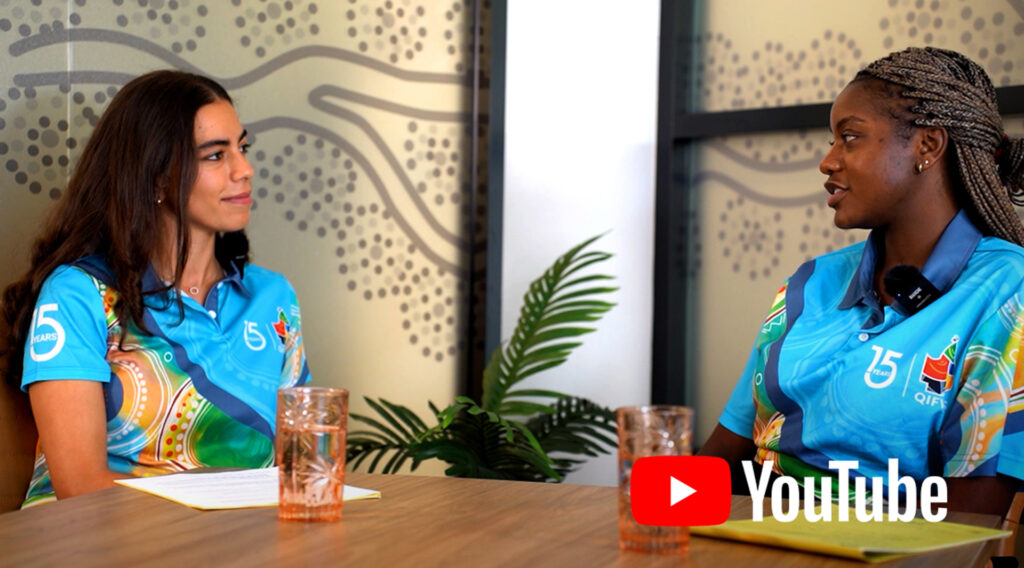
This month on Blakchat, two young guns from our Brisbane office, Hala Hamed and Alice Ingabire yarn about what it means to choose social justice as your specialist area when embarking on a career in law. They discuss what motivated them and share some tips for other legal hopefuls. Check out the chat by clicking on the picture.

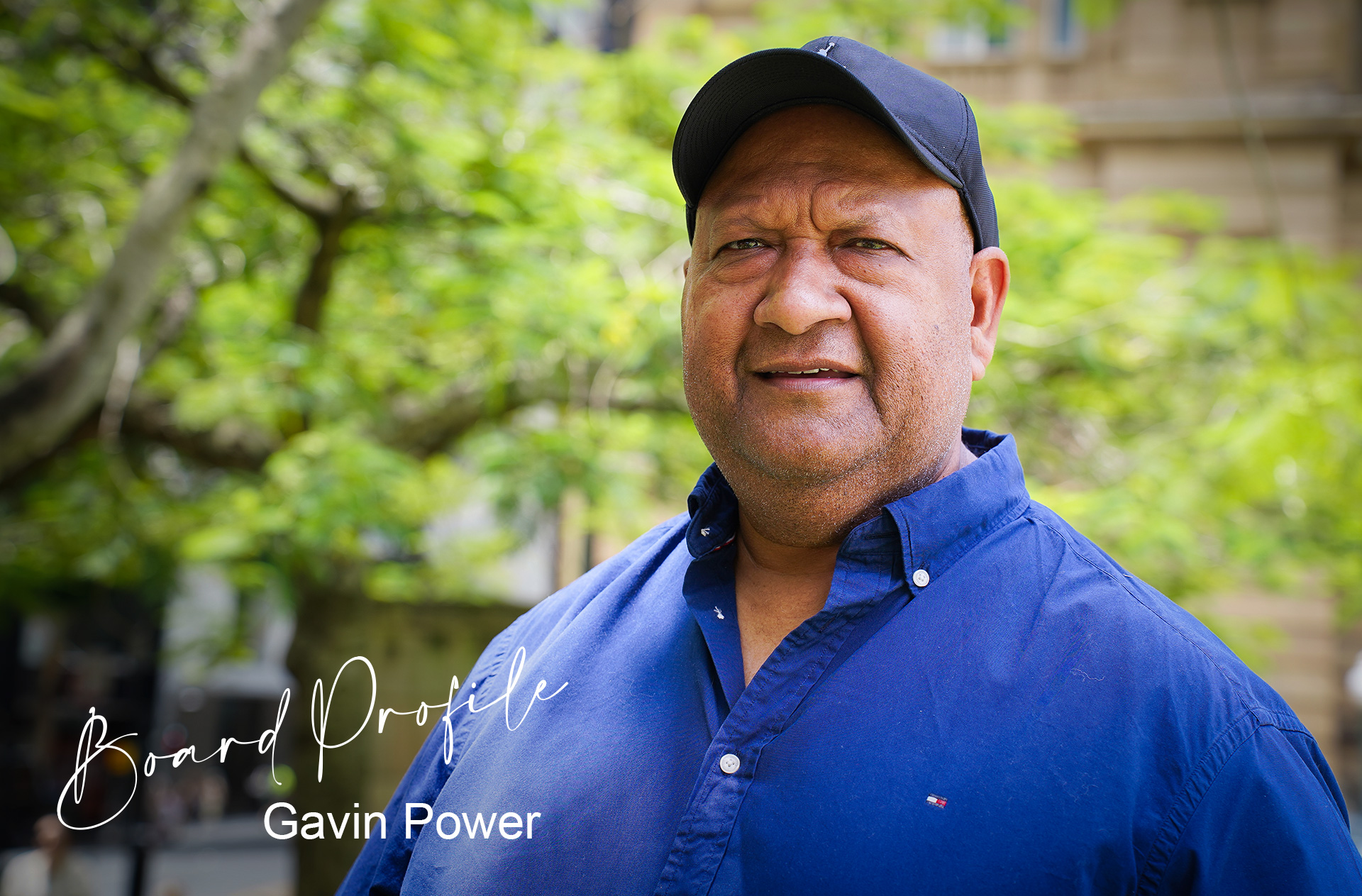
OCM: Thanks for sharing your story, Gavin. Why don’t we start with where you were born and bred.
Gavin: Well, I was born in Collinsville, a little mining town about 80k’s inland from Bowen. Our dad was a boilermaker at the power station there. As far as I know, at the time we were the only Aboriginal Southsea Islander people in the township. It was a great upbringing.
Gavin: There are four boys in my family and I’m the second eldest.
OCM: How did you enjoy your schooling years?
Gavin: Once we moved to Bowen, I only went to school, if I’m honest, for sport and to socialise – because that’s where all my cousins were. We grew up at Queen’s Beach. There were cousins and family everywhere – plus neighbours, uncles and aunties. It was that kind of community.
OCM: What are your happiest memories of growing up?
Gavin: As a young fella, we could roam freely in Bowen. We never had any run-ins with police or anything like that. They knew our families. So, my memory was that was it was safe. We’d walk home from school, and we had the creek at the end of our street, and that was like the afternoon event.
OCM: Did you finish high school?
Gavin: Yes, but when I think of that period growing up, the focus was more on getting a trade. Some people had that priority of schooling and education, but for me it was all about getting a different piece of paper – a trade qualification.
I started my apprenticeship as a fitter and turner straight after Year 12, and a couple of years into that I also got married. We moved to Rockhampton as soon I’d got my trade qualification and started my first job at an engineering shop there.
I did that for two or three years before I started to feel that perhaps the trade wasn’t for me, and that something else might have been calling.
Around that time, the Government was advertising for Aboriginal and Torres Strait Islander people to apply for work in government roles. I saw that as an opportunity, and to this day, I can still remember the conversation I had with my parents. I said, “I’m going to put the tools down and give some government work a go.”
My dad was one of the very first Aboriginal men to get a trade and he wasn’t happy with my decision. He couldn’t quite get his head around it. Particularly giving up the security of a trade for something that could be anything or nothing.
But one thing I’ve learned is if you want to walk on water, you’ve got to get out of the boat.
Fortunately, I’ve always had the support of my wife Kaylene. She’s the brains of the outfit.
OCM: So, you started your early career in government, and what did that look like?
Gavin: I remember walking into an interview with Department of Natural Resources and Mines, and saying straight up, “I’ll tell you now, I know nothing about what this department does, but I’ll turn up every day and work hard for you” and for whatever reason they hired me on the spot as an administrative person looking after the mail, doing administrative work and answering the phones.
There were 300 staff at the time, and I had to learn what each of their roles were quick-smart, as well as the phone system. It was a steep learning curve for a tradesman more used to having grease on his hands, but it helped me understand administrative processes and how an office works.
After that I went to Queensland Transport, where I was the only male at the front counter at the Service Centre at Rockhampton. I was lucky to have a cousin working there who was well respected. Working amongst the whole team of women was a great learning experience for me.
Then we moved back to Bowen and after a stint commuting to and from Airlie Beach, I got back on the tools with the same business I’d had my first job at.
From there I went down to Brisbane to support our daughter in her last few months of Year 12. Again, stepping out of the boat, I had no job, but this is our baby who needed support. It was during that period that I started volunteering at a food bank and going for job interviews.
I was walking into the church in Bowen, when I received a phone call to let me know I was successful in gaining an interview, the same day we were preparing to bury my mother. That was tough.
During the interview they asked, “If we hire you today what’s the first thing you’re do? To which I replied, “My first obligation is to find out who the traditional owners are and ask their permission to work and walk on their country.” So that was my journey into Child Safety.
OCM: What were your experiences during that period?
Gavin: A lot of learnings, some great but mostly sad experiences.
It taught me about the strict hierarchical nature of the public service system. Having a degree carried all the weight. I was told in no uncertain terms that I was ‘just’ a Child Safety Support Officer after I respectfully questioned a Team Leader about a decision. A lot of these people progressed from high school to university and directly into positions of authority, making decisions about our people.
I found it difficult to see family’s voices taken from them. Or not invited to the table. And I could see why many of our fathers became frustrated.
It’s fair to say that there were some fathers that staff were scared of. One case was an Aboriginal man who probably did threaten staff and, yeah, of course that’s not acceptable, but no one had actually taken the time to sit with him and listen to his story. So as a black man myself, I wanted to do that and respect him as a dad.
It should be noted, we don’t stick to role descriptions, because if we see a need for our mob, we’re going to help them, in every way and any way. Within the public service system that could be your undoing but that’s how we operate. We think communal.
OCM: So, did you work through this father’s frustration?
Gavin: Yeah, people only saw an angry black man. He would react because the staff would not consider his position. At the time, he was the only protective factor, because the mother was not on the scene. She was in prison, and so instead of trying to work with this man and say, “How can we help support you to keep these kids at home”, they only focussed on how they could remove the children.
The Child Safety Officer who’d known the family for many years, would just walk into their yard, knock on their door and if no one answered just let herself in.
I told the caseworker that in future, I’d do all the dealings with the father and if you have any messages for him, they should come through me, and I’ll go and approach him.
OCM: And do you feel like you won him over?
Gavin: Absolutely, to such a degree that on the day when he found out that I was leaving, he cried in my arms. He hugged me and said, “I won’t be able to do this without you.” This angry man just wanted to be heard and shown some respect and consideration as a father.
OCM: How long were you with Child Protection?
Gavin: It would have been 12 or 13 years in total, but I ultimately finished in Head Office as other doors opened along the way—first the opportunity to act as a Cultural Advisor, in the Systems and Practice Review team, investigating cases involving the death or serious injury of a child in our care. Finishing up as the Aboriginal and Torres Strait Islander Practice Leader in head office in 2024. Currently, Director in Engagement Partnership in Qld Education.
OCM: In the intervening years, it seems that Department’s perception of staff members without a degree must have softened.
Gavin: Over the years I think I really learnt how to articulate, tough conversations with people above me, regardless of pay scale.
OCM: When did you start to become involved with QIFVLS?
Gavin: Seven or eight years ago, probably more. I’ve known Adrian Geary [QIFVLS current Chair] for years and he’d say, “It’d be good to have you on the Board.’’
I could see the alignment, particularly where we’re talking about legal services, and child protection.
In the years I’ve been on the Board I’ve seen it evolve through different leadership. The leadership plays such an important role in the culture of an organisation.
I could make the comparison to family, and the importance of mum and dad as role models. Those roles, and the ability to deliver influence is so important. So, when it comes to the organisation, for QIFVLS, leadership is so key. That’s so important who we have as a CEO and what their values are.
I’m highly attracted to people who have those high values of looking after others and promoting others above themselves. To me, that’s what success looks like.
Why does QIFVLS exist? At the end of the day. It’s about keeping our children and our most vulnerable safe. This just aligns so well with how I’ve lived my life.
I used to question myself, even at Child Safety. I’d ask, “what do I have to offer?” Because a lot of times I’d work with people who are really broken, yet I didn’t come from a broken family. How can I help them or relate? At first I struggled with that, but then it was like a light bulb moment, and I thought, “Yes but I do know what a good father looks like and what a good, safe household looks like. So that was my foundation and that’s what I can bring.”
OCM: You’re a well-respected member of the Board, as you are in your own organisation. Where do you see your path taking you next?
Gavin: To tell you the truth, I’ve never said, “What’s the next step?” People have come looking for me, so if I’m honest I am where I’m supposed to be.
OCM: As you’ve matured, what is something that you’ve learnt?
Gavin: Be honest, genuine and be transparent, with no hidden agendas.
When I was a young fella, I’d sit in the back seat behind Mum. After Dad had just finished a meeting with his brothers, Mum would ask Dad “what did you talk about? and after he told her she’d say, “what did you say?” he’d just shrug: “Oh, nothing much.”
But a few days later, when my uncle visited, Dad had something to say. I watched that play out over the years and it taught me something: you don’t always have to speak straight away – he was considered.
Even now in meetings, you don’t need to fill the space. Leave room to think. That’s the lesson I’ve carried—be quick to listen and slow to speak.
OCM: When you have time for yourself, how do you wind down and relax?
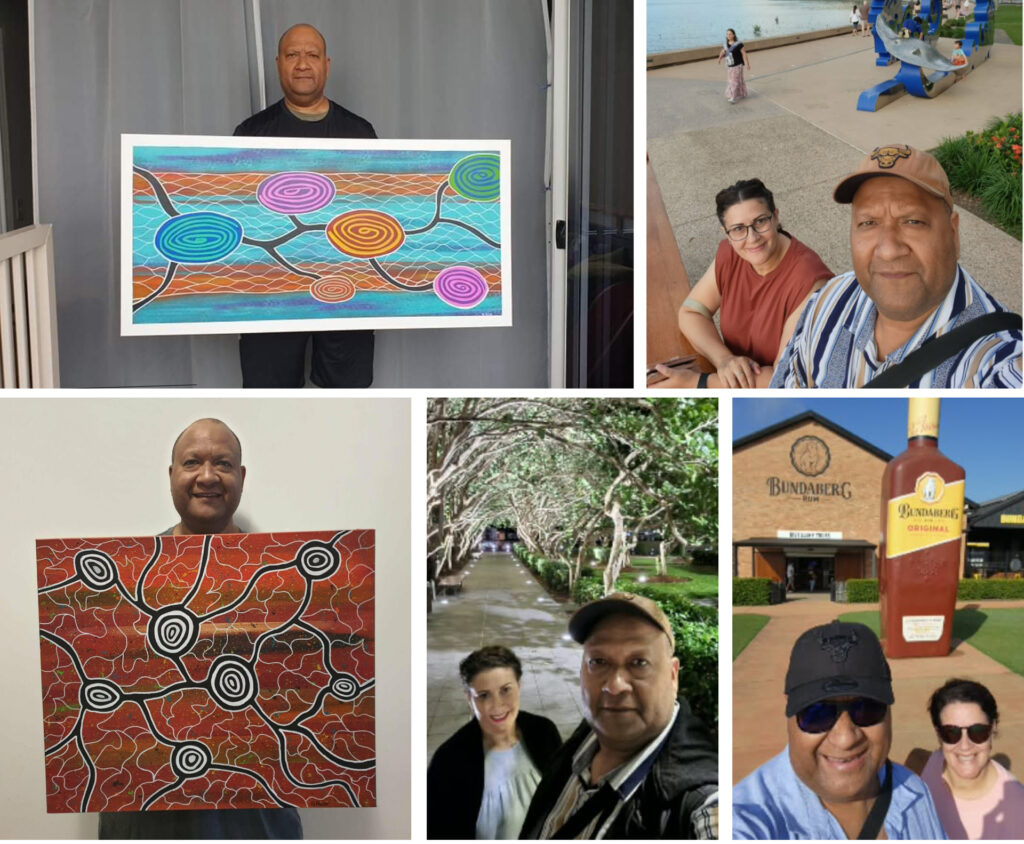
Gavin: I’m happy doing stuff with my hands. I play bass guitar every now and then at a church on the weekend or wherever I can. Sometimes I paint or print things on my 3D printer. I’ll fix anything around the house if I can pull it apart, the washing machine or whatever, that’s the mechanical side of me. I just don’t touch the coffee machine – but that’s another story.
OCM: Thanks Gavin


When an individual or organisation makes a tax deductible donation to QIFVLS, they can be confident that their funds are going towards making a tangible difference to the safety and welfare of Aboriginal and Torres Strait Islander people experiencing or at risk of domestic and family violence.
Our team are grateful for all donations that help our not-for-profit organisation to continue offering this critical service. Donations of $1,000 or more help fund outreach services to some of Queensland’s most remote ATSI communities.


Are you in search of a rewarding profession that will take you on journeys through the breathtaking landscapes of Queensland? One that promises not only career advancement and skill enhancement, but also attractive perks, substantial travel allowances, and one-of-a-kind professional adventures? Are you drawn to a career that enables you to make a positive difference in the lives of others?

Look no further – your new career awaits you! At QIFVLS, we are dedicated to combating Family and Domestic Violence within Aboriginal and Torres Strait Islander Communities. Our methods encompass education, advocacy, legal reform, court support, and casework assistance. By focusing on early intervention and prevention, our aim is to empower individuals impacted by Family Violence to regain control over their lives. We are in search of outstanding and dynamic individuals who can join us in achieving this mission.
If you envision yourself fitting into this scenario, we encourage you to see what’s available here.