

As 2025 draws to a close it’s a great time to reflect on the year that was, and for QIFVLS, what a year it has been.
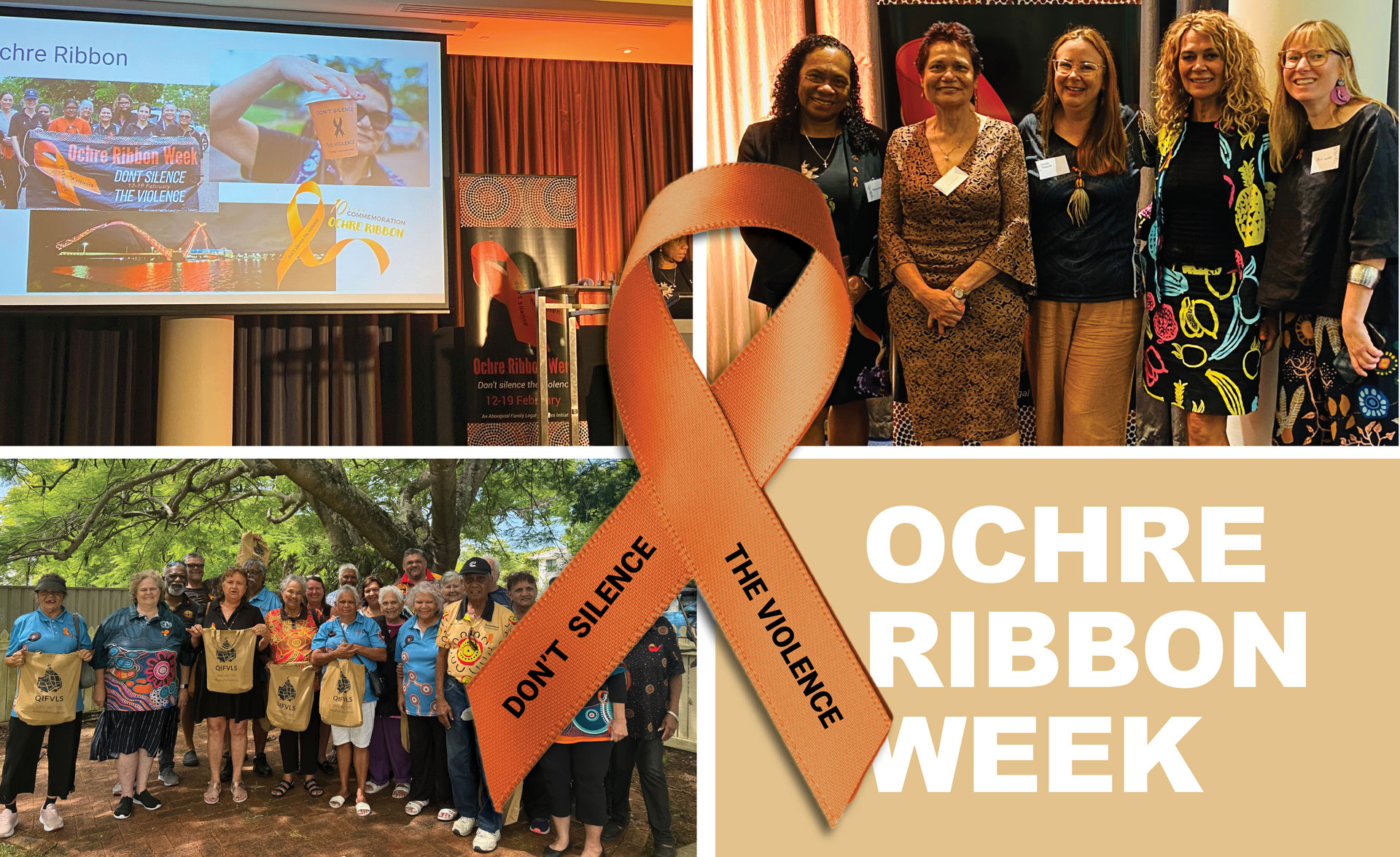
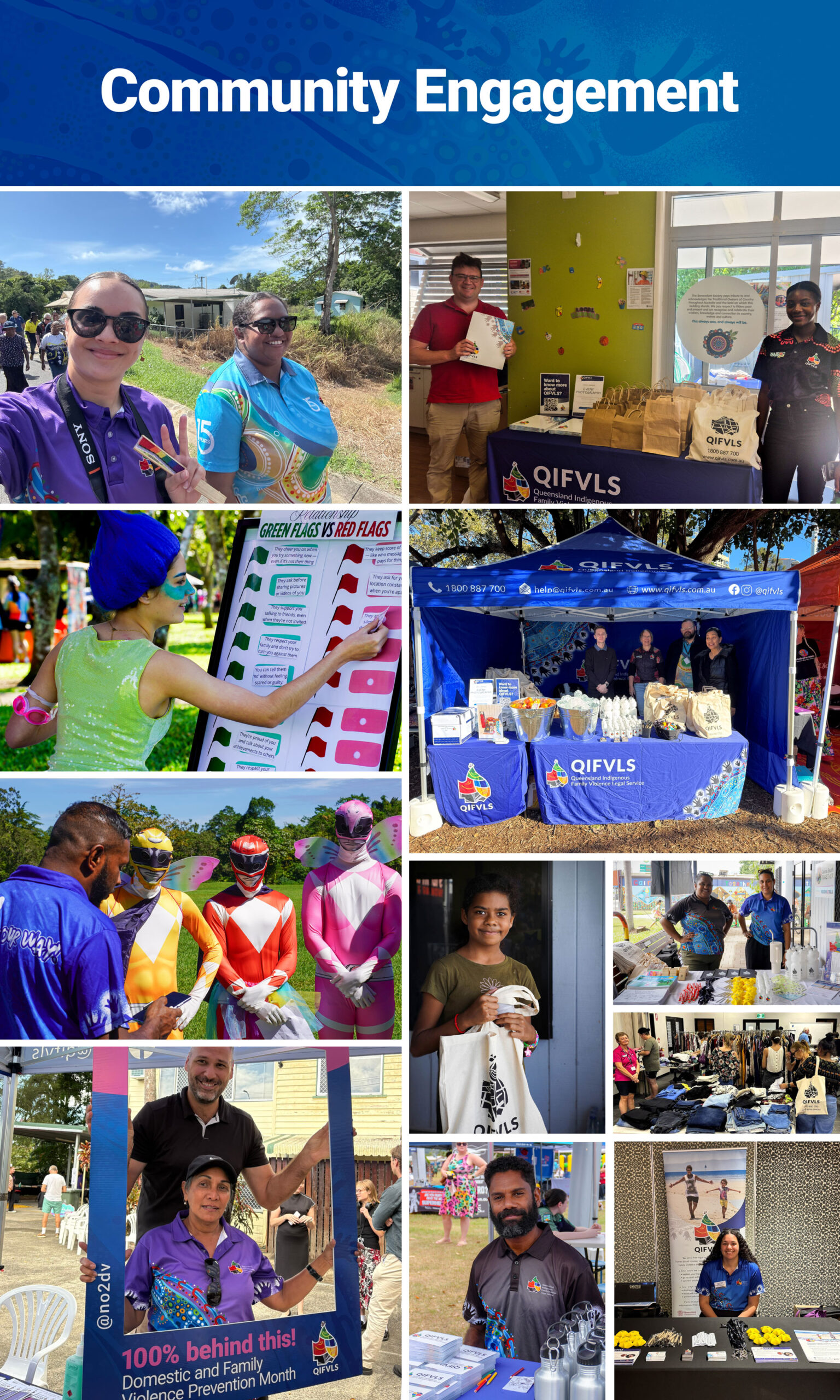
Our teams have been incredibly active and engaged in community throughout the year; on legal matters, in community education, on the advocacy front and working for Aboriginal and Torres Strait Islander peoples across the state to reduce the harm from domestic, family and sexual violence.
The rates of violence in the community remains stubbornly high, and at grossly unacceptance levels. It is sobering to consider just some of the statistics: First Nations women are 35 times more likely to be hospitalised due to DV than other Australian women, one woman is killed every nine days by a partner, one in four men have used physical or sexual violence against a partner.
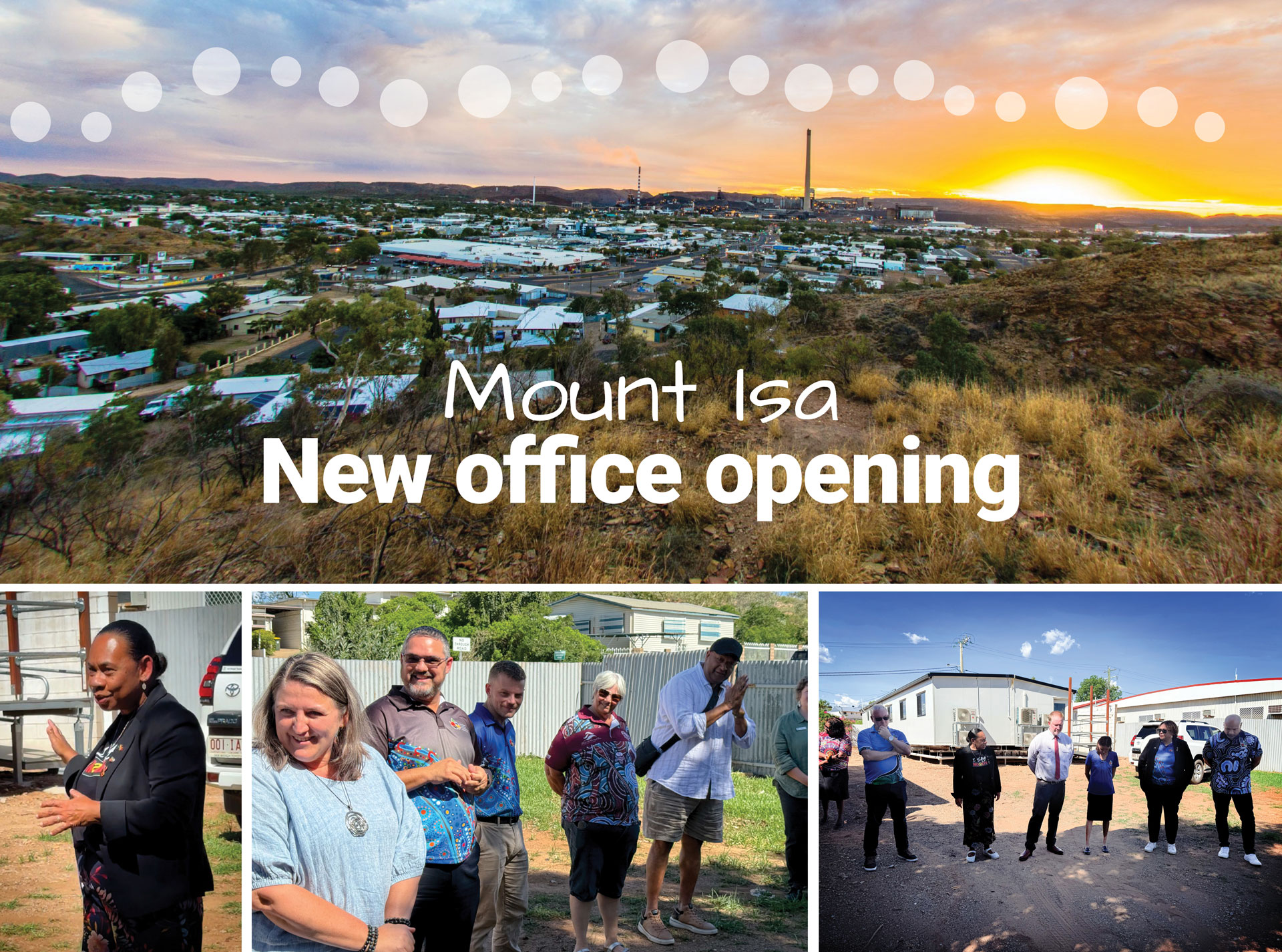
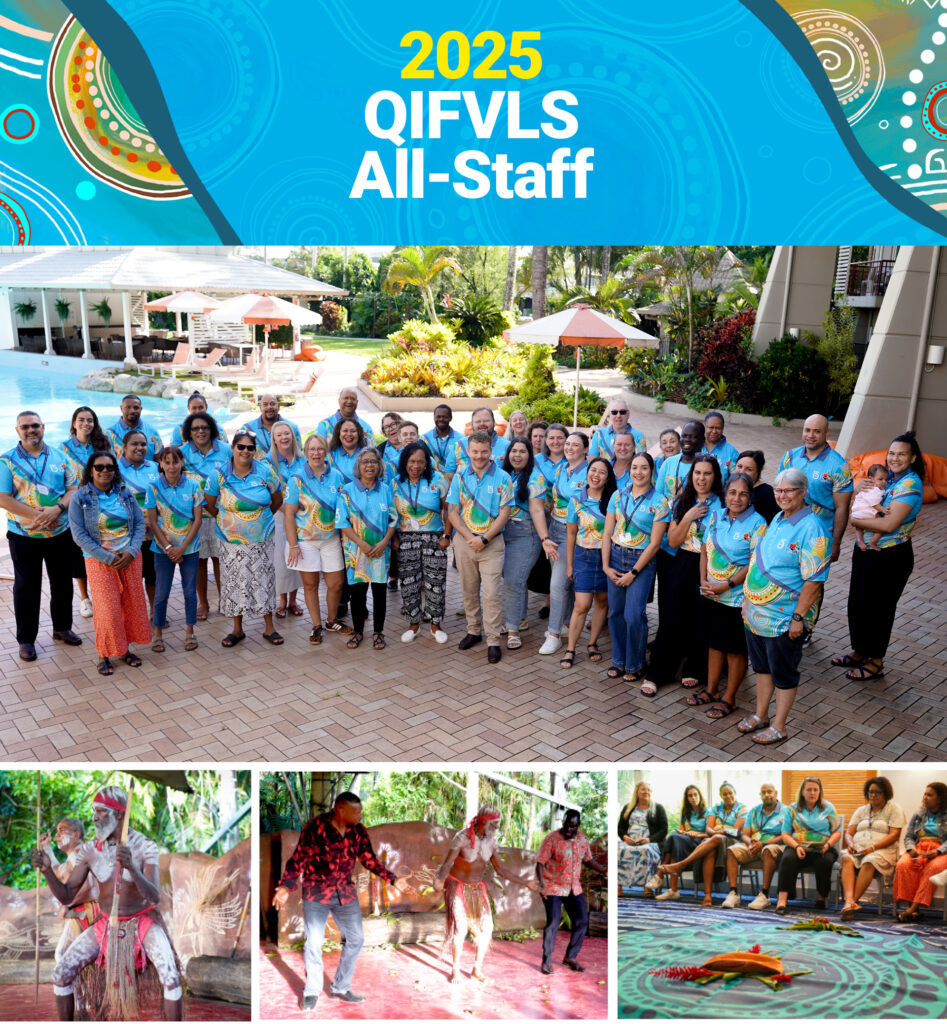
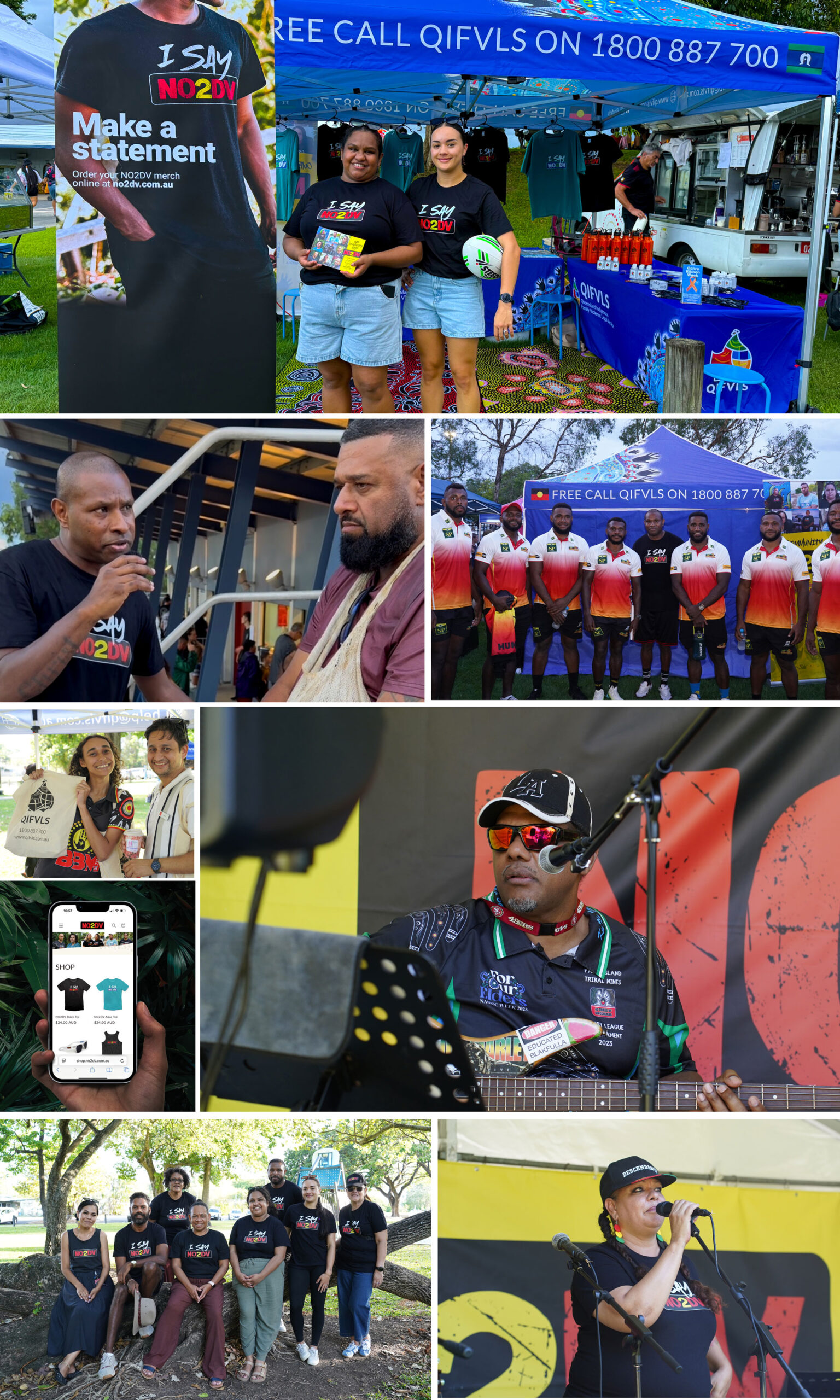
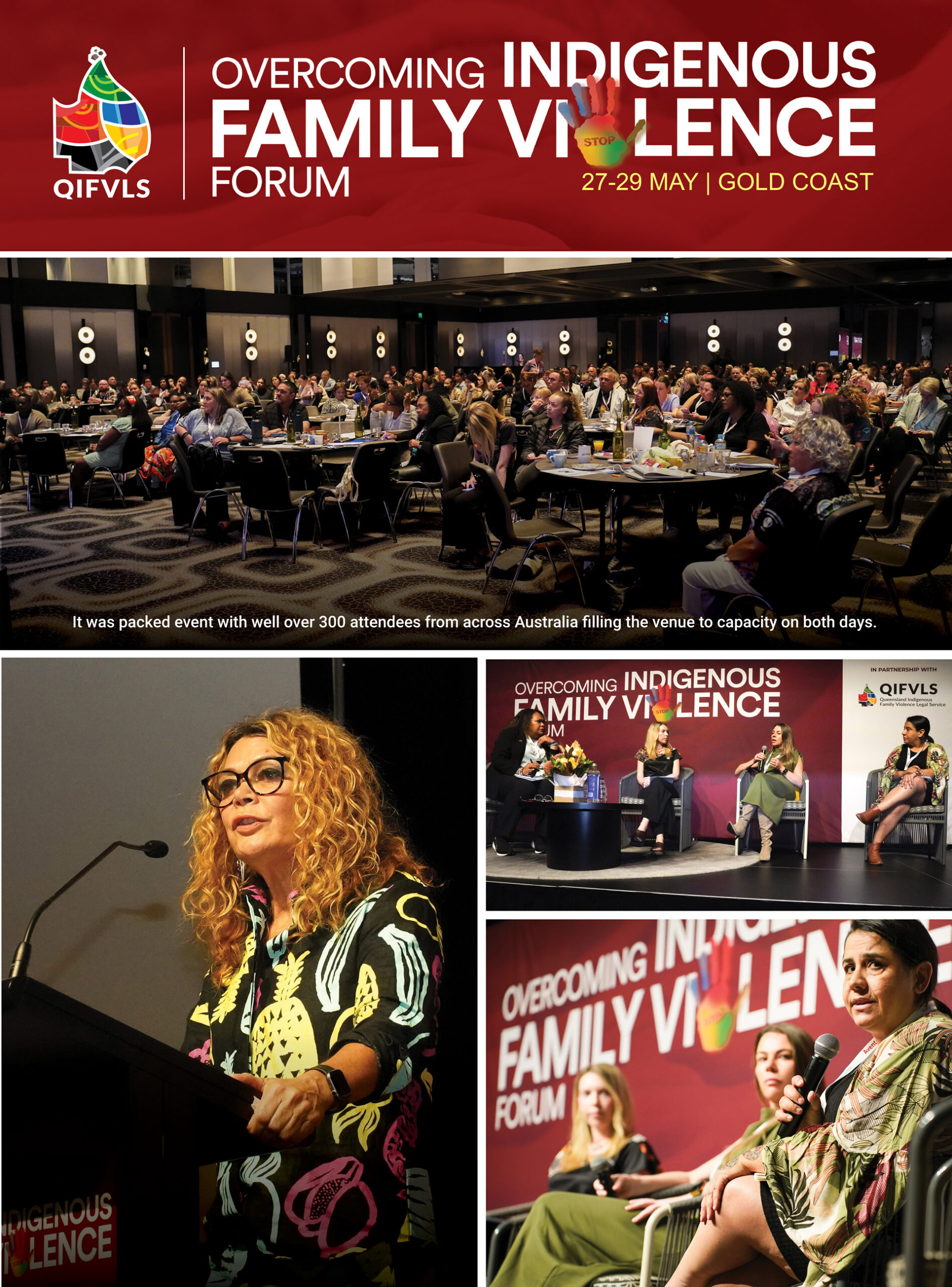
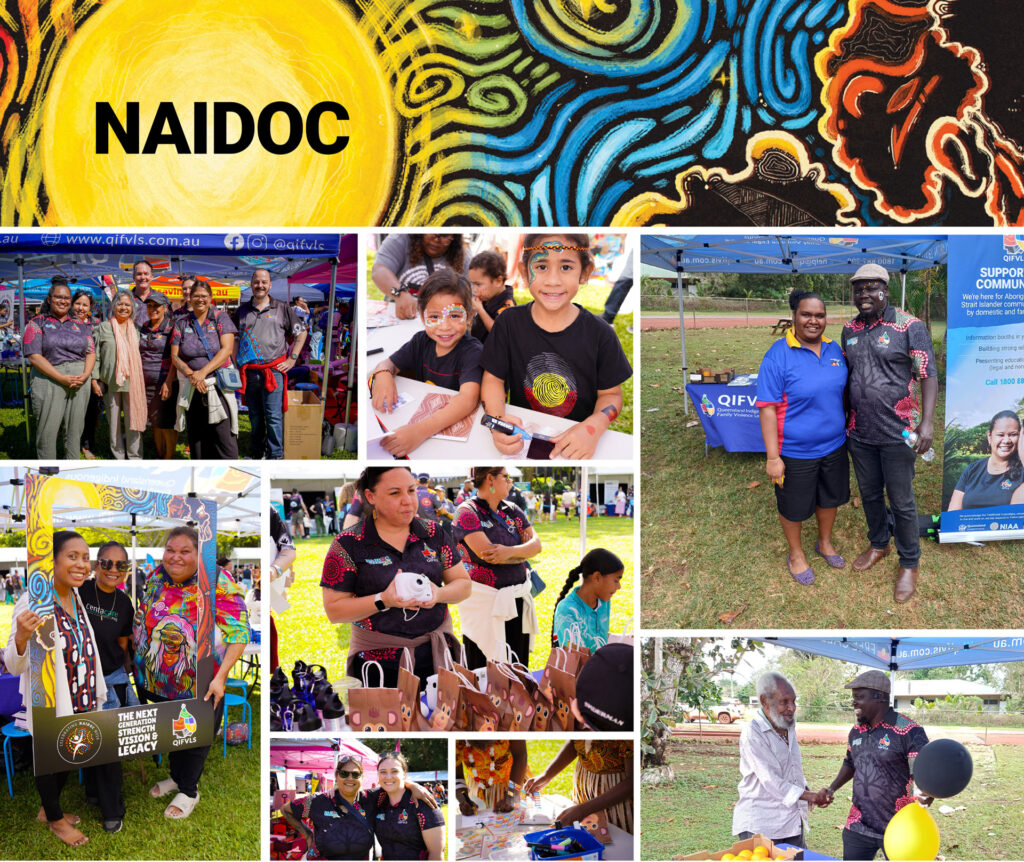
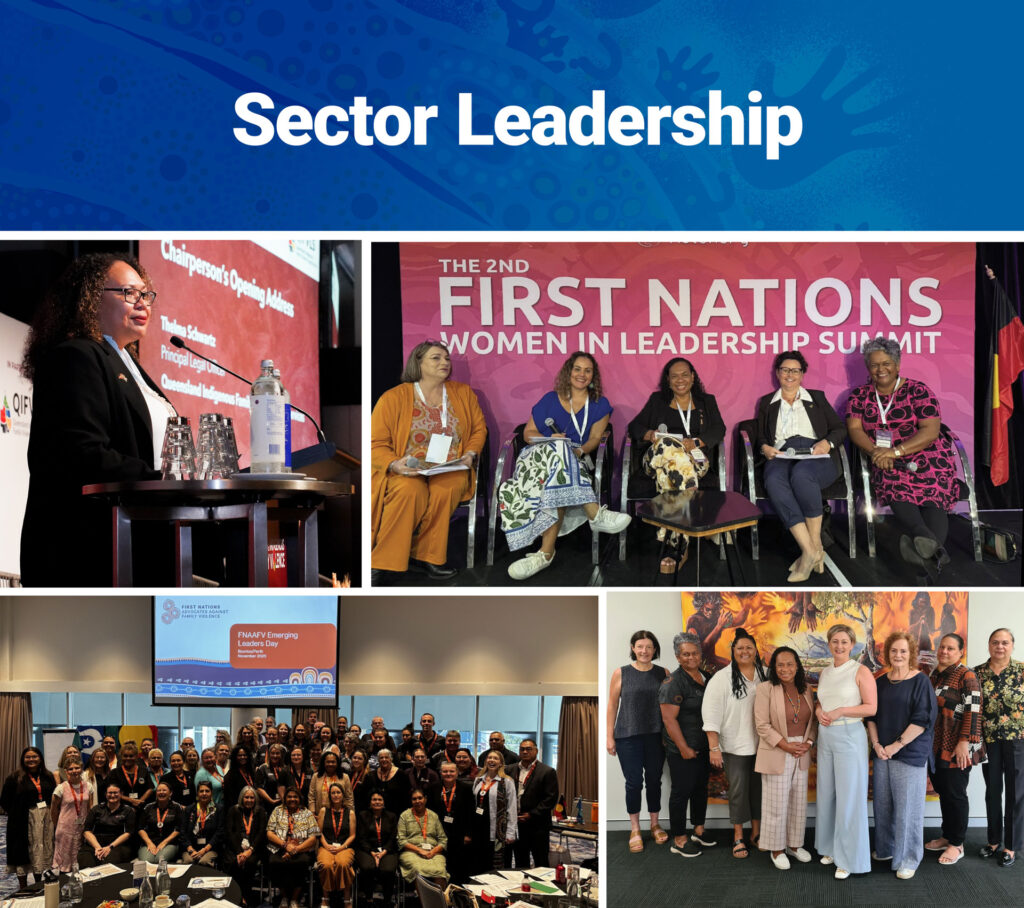
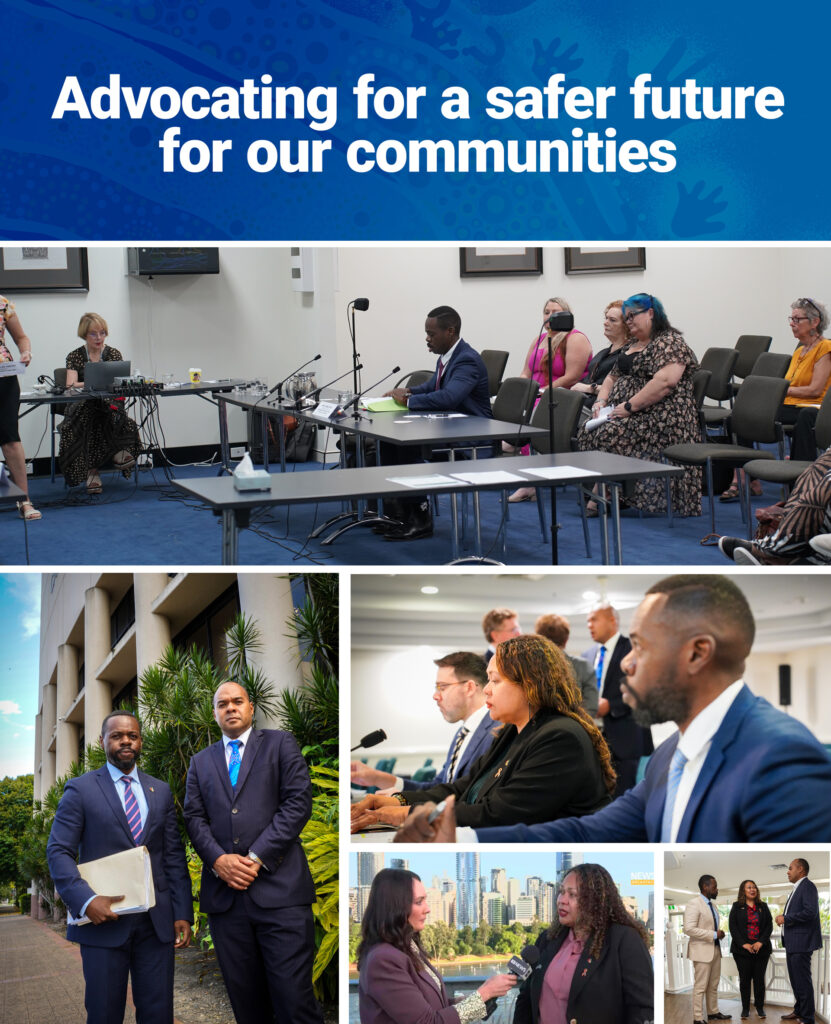
As shocking as these figures are, they reaffirm our purpose and commitment to delivering solutions, both on the ground in community today and by improving service delivery for the future. The images shown below reflect the scope and depth of this engagement.


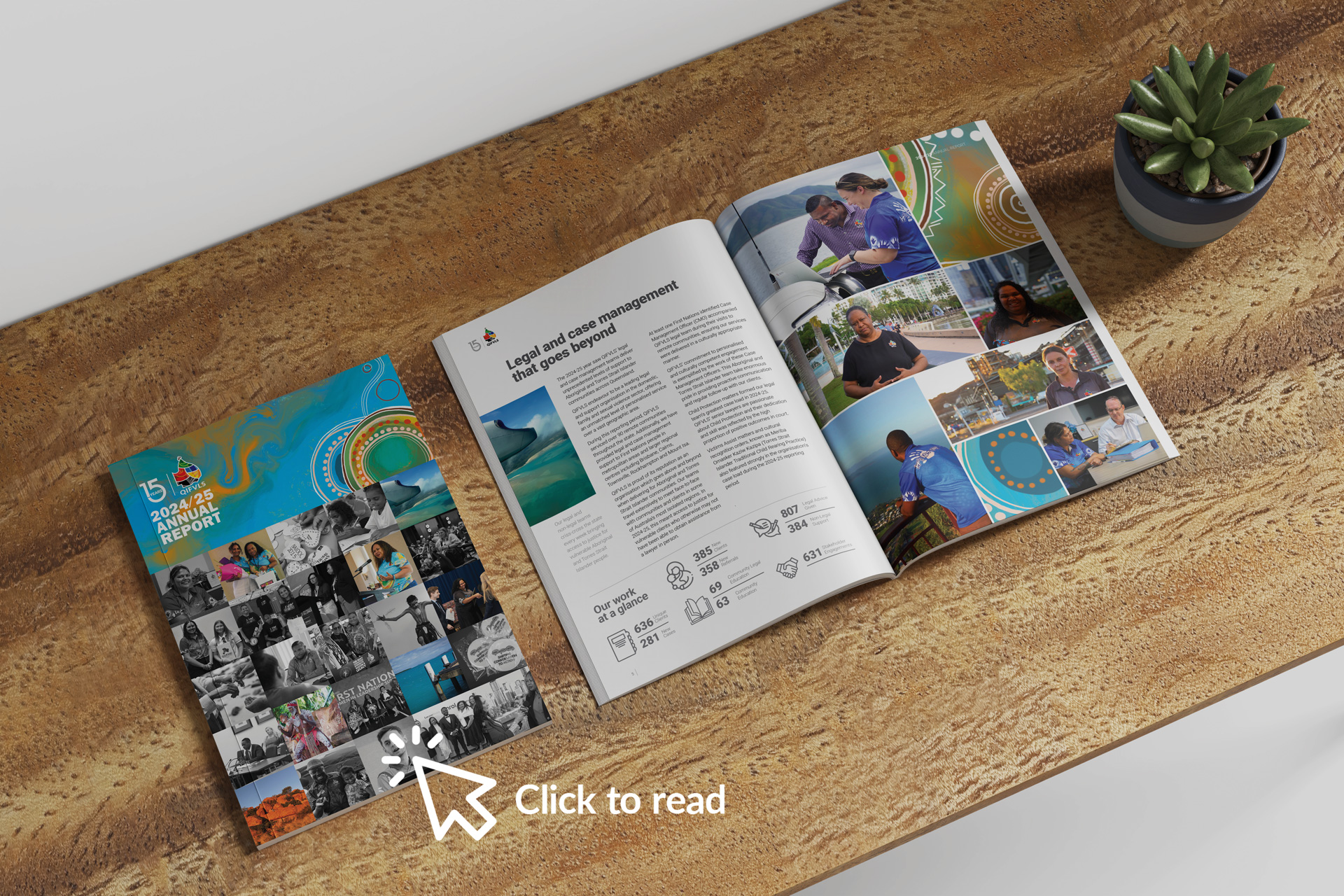
It is with great pleasure that the QIFVLS Board and Executive Team present the 2024-25 Annual Report to our valued stakeholders, funding partners, collaborators, dedicated staff and the communities we proudly serve. The Board takes immense pride in the significant progress and achievements of our organisation over the last reporting year and this work is suitably reflected in QIFVLS’ annual report. Click on the image below to open it.


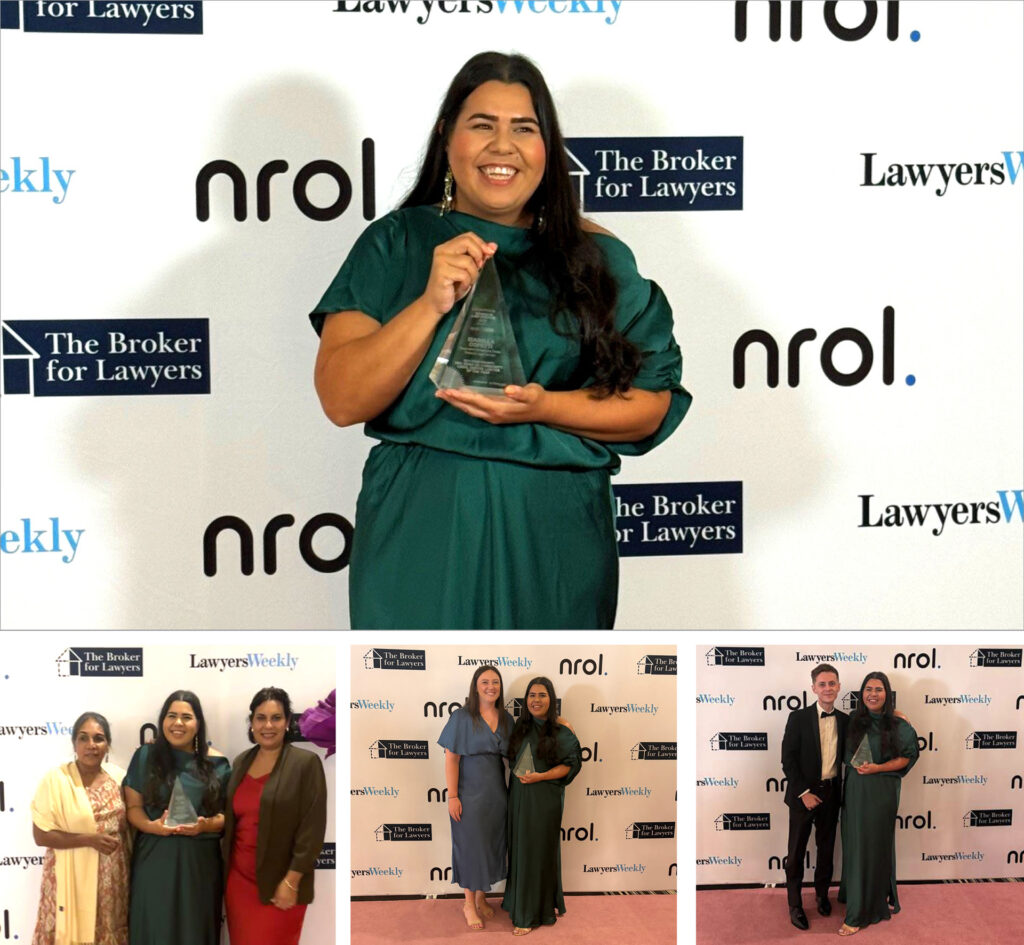
Last month, our Cairns Office Principal Lawyer Isabella Copetti was recognised as the best Not-for-Profit, Pro Bono or Community Legal Centre Lawyer in Australia at the Lawyers Weekly 2025 Women in Law Awards. The glittering evening, held at the Crown in Melbourne, was attended by hundreds of industry peers.
Isabella was supported at the occasion by a number of her Cairns office colleagues, shown in the images below.
In her gracious acceptance speech Isabella said, “I would like to highlighted the work that community legal centres and not for profit lawyers conduct, the consistent challenges we face in the work we do to breakdown barriers and cycles whilst assisting and representing vulnerable members of our community. This is something our team at QIFVLS do every day and I’m incredibly proud of the work we do!”

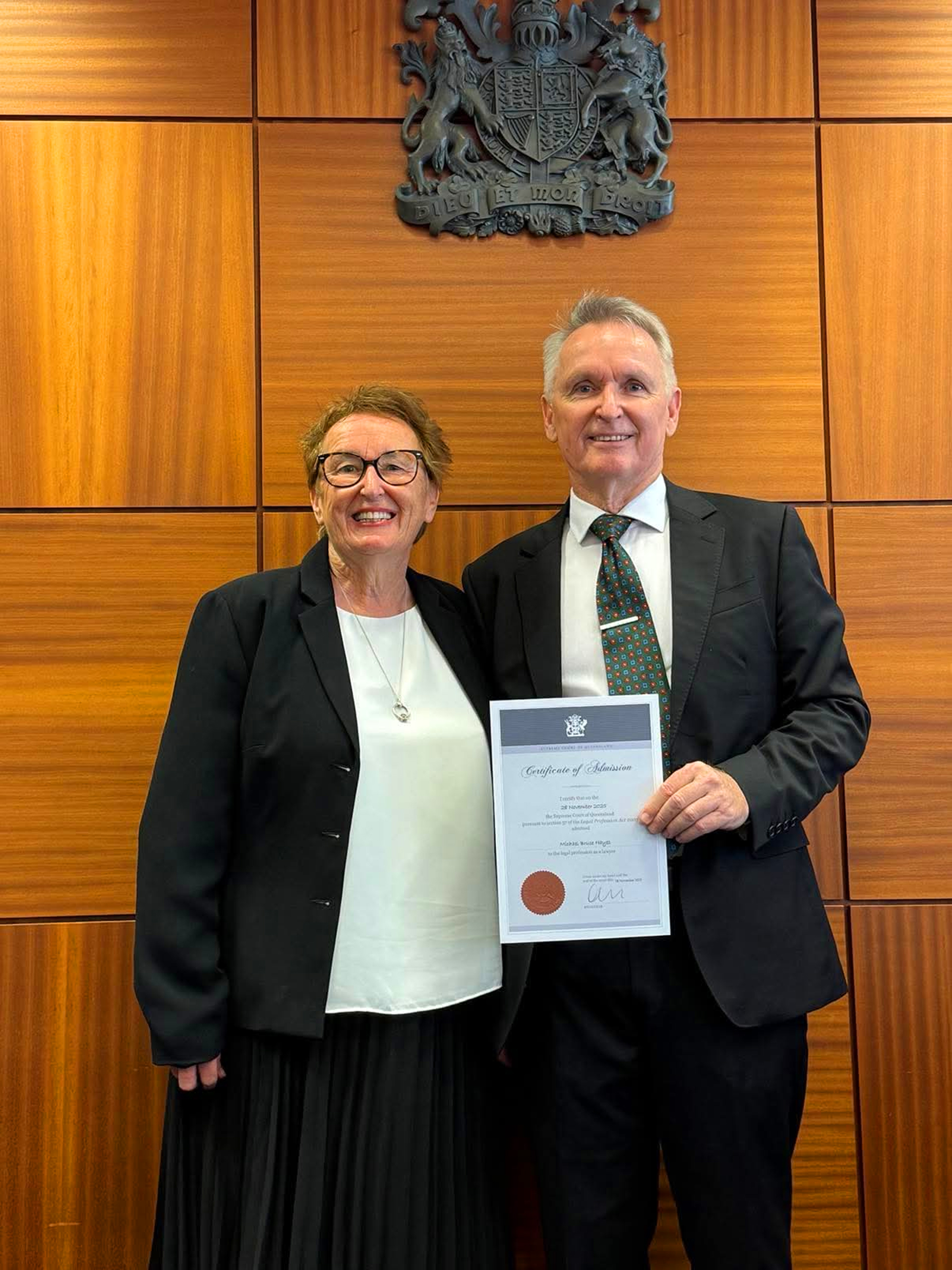
QIFVLS is proud to congratulate Cairns Office Paralegal, Mike Hayes on his admission as a lawyer in November. Mike is shown below with his sister Karen, also a lawyer, who encouraged him to complete is admission application. Our freshly-minted lawyer is flying high at QIFVLS following a successful previous career as a commercial pilot.

To help celebrate this season of giving and sharing, QIFVLS invites you to enjoy this year’s Christmas message – brought to you by the ‘QIFelves’ and all the QIFVLS team. Click on the image below to watch.


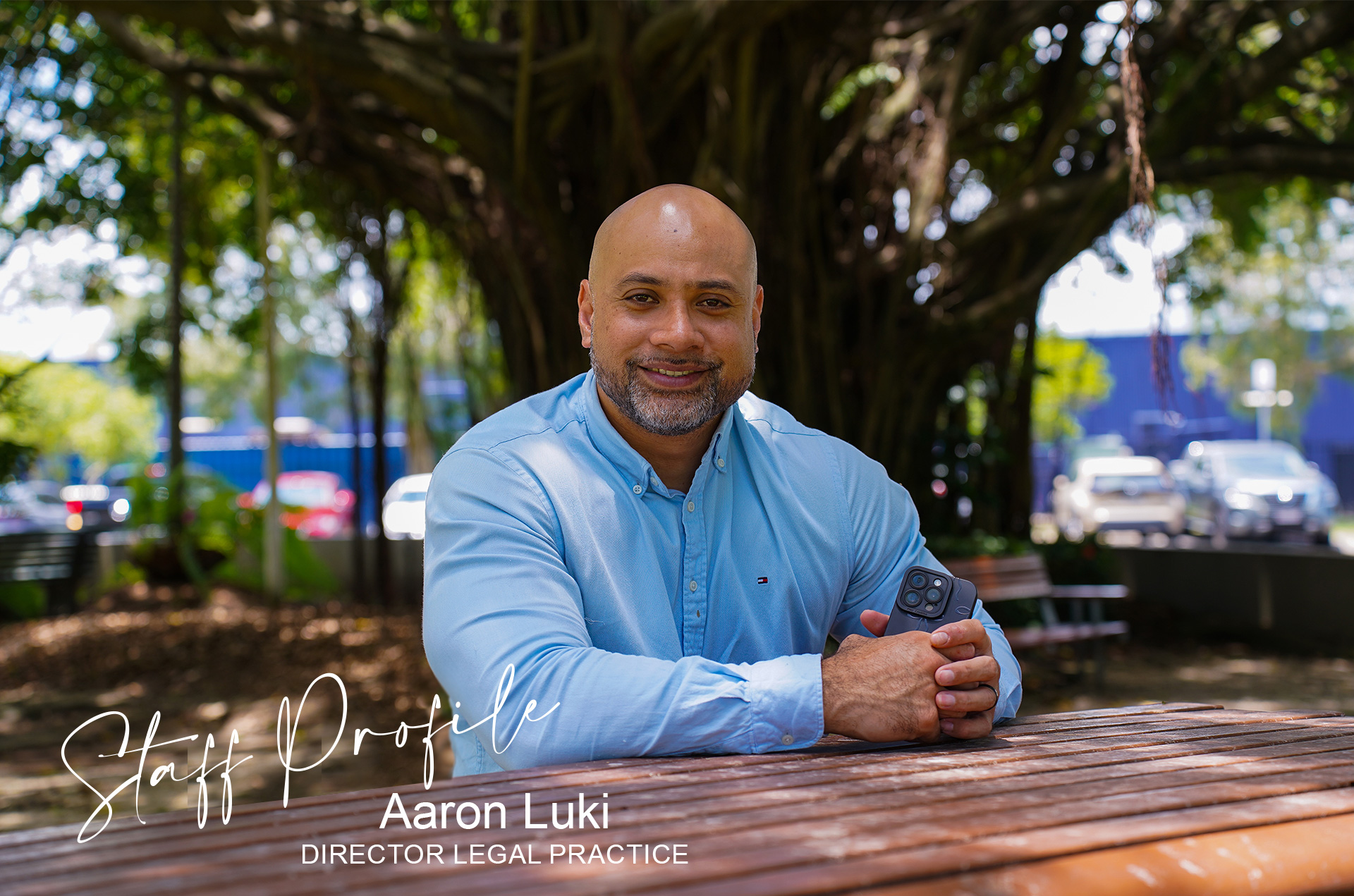
OCM: Let’s start, as we always do, by finding out where you were born and raised.
Aaron: I was born in Auckland, New Zealand, and at the age of three, the family relocated to Brisbane after my dad took up a position in a marketing company for the paint industry. We were lucky to have a stay-at-home mum. Then after three or four years we moved to Cairns.
I’ve got five brothers and one sister, and I’m right in the middle – three below me, three above me.
We didn’t grow up with much. Our culture, our family and our religion were all a big part of our life growing up.
Our heritage is Samoan. My mom and my dad are Samoan – my dad’s part-Niuean as well, which is another island off the Pacific coast.
We were brought up in the Church of the Latter Day Saints, so faith was a big part of our upbringing. Mum and dad brought us up in a religious-based home, coupled with strong family values.
OCM: I imagine you took to sports pretty early on?
Aaron: Yeah, that came from mum and dad who were both big into sport. Mum played volleyball and basketball. Dad played anything he could, but mostly rugby, basketball and touch footy. Volleyball was big in our family – we all loved volleyball for some reason!
OCM: How did you enjoy your schooling years?
Aaron: All my schooling was done in Cairns, locally then Woree State High. I loved that school, but it was based more around sport than academics.
OCM: Were there any academic subjects that appealed to you?
Aaron: Yeah, legal studies! Did I do well in it? No. But there was something about it that stuck with me, so when I was in Years 11 and 12, I remember thinking, “I really like this”.
OCM: What was it about that which piqued your interest?
Aaron: I don’t know if it was my religious background but I had started to develop an interest in social justice. I experienced a lot of racism in my schooling years and it may have stemmed from that. It didn’t seem right that someone older or in a superior position should make a child or anyone else feel inferior.
OCM: So with your interest in legal studies at school, did you go to university straight after graduating?
Aaron: After school I played both rugby league and semi-professional rugby union for a little while before I accepted a call to serve a mission for my church in South Korea.
That meant moving to America and attending a college that specialises in teaching languages from all around the world to young kids who will go on to be missionaries.
Once you turn 19 years of age, you can qualify for it, and then you get called to certain places. It’s called the MTC, or Missionary Training Centre. Essentially, it’s a hub for all missionaries who are going out to serve.
What language you’re learning dictated the time frame which you’d spend there. Because Korean was a tough language I was there for three months. Spanish is a little bit shorter for example.
OCM: You would have come across a great diversity of people. Do you think that changed your perspective?
Aaron: Definitely. I was able to see a university style education delivered with international platform, offering a possibility for everyone.
OCM: So you saw yourself as potentially following a missionary path?
Aaron: As part of our religion, once you hit the age of 19, we’re encouraged to go on missions. It was something I grew up with. Dad and mum served, and my brother, so it was something I grew up expecting to do.
OCM: What do you think are the strongest values that your faith gave you as you grew up?
Aaron: Family – that was probably the biggest thing. The other thing was resilience. Our religion anticipates life’s setbacks. It instils in you a courage to get up and we keep going. We understand Jesus and God, and what that looks like. But I think there’s a very practical element to this symbolism of ultimate sacrifice – not that we’re asked to do that. Obviously, it’s a different era, but there are some elements of that which I use today – such as resilience and forgiveness.
OCM: They’re good qualities.
Aaron: I think so. Everyone has a different view or interpretation of what religion means to them, even from the same religion. But for me, what rings true is the fact that history says that we’re designed to fail, but we’re also designed to succeed – and immensely beyond what we think we can do.
OCM: Are you still practicing?
Aaron: I do. We go (to church) as much as we can. It’s still a practice that I grow my kids up with. My oldest son has chosen not to be as active as the rest of us. I don’t mind, that’s up to him. He’s starting to become an adult. I don’t push it on him, but he understands and respects the value of family and what we do.
OCM: After three months you went straight to Korea?
Aaron: Yes and spent 18 months teaching there – teaching our religion, and teaching English.
That taught me a lot too. It taught me how to work. It taught me how to suffer a little bit and come out the other side, and how to be on my own.
It did come with its challenges. I was just 19 years at the time and the Korean culture is based on having respect for experience and age. So for youngster like me to be teaching religion and English, the reception was often: “What are you going to teach me? You’re a child, what do you know about religion?” But now that I look back, the point for me wasn’t to convert, the benefit was in my learning.
OCM: So then you came back to Cairns?
Aaron: Yes, I came back to Cairns worked for my brother, who was a builder, and then not too long after got married and started university studying law.
I started uni by doing a business course to get into the mainstream and once I’d finished that, it allowed me to get into law. So I did four years of law, and then did one more year on top of that, doing my articles, which is the principal legal training, after which you get admitted in court.
After that, I found a position with ATSILS. Not even as a lawyer – more as a junior, just helping out where I could. I volunteered there first, and then they put me on as a paralegal.
My mentor at ATSILS was Mandy Bowen. She’s a judge now. Her husband was the CEO of QIFVLS at the time, and that was my first connection to here.
Mandy was really good to me and one day she said, “Why don’t you look at family law? I can put you in touch with my husband, maybe there’s something going at QIFVLS.” And that got me the interview and where I really started my career.
OCM: Do you think, given your interest in family and family values, that it felt like a good fit?
Aaron: Definitely, definitely, I think that was a big part of it.
I have to say, my perception of what a lawyer was, is very different to what it is now.
OCM: How so?
Aaron: Just based on what I saw on TV, I placed lawyers on such on a pedestal and thought you had to be someone else to do the job, when the reality was that once I understood things, I realised that it was something I was capable of. So really, QIFVLS was the training ground to go from being a lawyer to where I am now.
OCM: Do you recall who your supervisor was at the time?
Aaron: Yeah, it was Mark Borham. The senior lawyer who interviewed me was Susan Wilde. That was at the old Cairns office on Lake Street.
OCM: So you were with the organisation, I believe, for quite a number of years after that?
Aaron: That’s right, yes, 10 years.
OCM: So I’m guessing your family would also have been growing during this time?
Aaron: It did, all through that period. I have four children – the oldest is 19 and the youngest is eight. Three boys, one girl.
OCM: How were those early years at QIFVLS for you?
Aaron: When I first came on board my initial period was really just about learning my trade, Susan picked me up as a bit of a project. I was just keen. I had no fear, because I was bit older too. My only fear was not knowing enough. So they asked me to take on trials. I remember taking on a trial that no one had touched for an extended period of time just because its complexity.
I recall that Thelma joined QIFVLS about that time. I knew her from ATSILS so was great to be working together again.
OCM: But eventually you decided it was time for a change?
Aaron: Yeah, I left a few years ago and went to the OCFOS advising Department of Child Safety on any orders relating to removals or early intervention of children that our department sort of represented.
OCM: In a sense, you were playing for the other team to QIFVLS.
Aaron: I was, essentially. After spending the bulk of my career to date at QIFVLS I thought it was important for me to experience something else and get a different perspective.
We had struggled with the Department so much at QIFVLS – it was like we constantly at battle with them. So my thinking was really to go over there and look at their processes. To a certain extent, I was able to make some small changes with process whilst I was with the Department. I did like my time at the Department but it was very different to here.
I liked the subject matter. As part of OCFOS I liked the fact that we had a piece of legislation that we were guided by. We had rules and practices and the purpose of our role was really to make sure that it was implemented correctly.
Essentially, the Department was our client, and so we provided them with the best advice possible to make decisions on. I liked that part of it, the fact that we would be able to give untethered advice to the Department for the benefit of children.
I wasn’t on the ground doing it, but our team was specifically accountable for providing advice on whether a child was removed.
To me, that was huge, because now I could control the quality of that advice going forward and see it first-hand. Are we doing what we should be doing? Is the advice correct?
OCM: And how many years were you there?
Aaron: It wasn’t long. It was less than two years. The Department really wanted me to transfer to Brisbane full time, which wasn’t going to be a good move for our family, particularly with my son graduating at the end of the year.
OCM: I recall that you were with another organisation before returning to QIFVLS.
Aaron: Yes, with the First Nations Justice Office in the Department of Justice, and that was up here in Cairns. But it was only contract work and more focussed on policy and law reform.
So after about three years, Thelma and I started talking about a new role back at QIFVLS.
OCM: How would you describe your role?
Aaron: There’s two parts to it, I think. There’s the strategic work that my role covers, and the operational. My role is to connect the two and to provide the executive team with a with an understanding of how our operations are going. It ensures that our legal team are meeting their KPIs, to consider any risks and to ensure that the executive strategy that we’re implementing at a higher level is executed on the ground level.
My role also involves advocating for a legal staff make-up that is inline with the strategic plan. Additionally, looking at talent development. Take our current Cairns office Principal Lawyer, Isabella Copetti for example. She started at QIFVLS as a junior lawyer with a passion for child protection, and this specialty has become one of the organisation’s most in demand caseloads.
Likewise the Brisbane office’s Principal Lawyer Brandon’s Begley. He was a paralegal with us back when I was a lawyer, and then he went to private practice and came back. Brandon was another one that we identified early as potential leader .
OCM: How would you like to see the organisation evolve?
Aaron: This organisation has so much more potential. To consider where we have come from, and to have been a part of those early conversations, and to now see what it has become is incredible. The graduate arm started as a conversation and now it’s becoming a reality. There’s the marketing arm that we’ve got now, and the business arm. All of this was were conversations over a table years ago, and now we’re seeing it come to fruition.
I see us continuing to grow a leader in our sector, as advocates, and as an organisation that is innovative in the space. I see QIFVLS as an organisation that others look to for growth of development, research and as a real shining light within the industry.
OCM: Outside work, tell us about your hobbies and interests.
Aaron: Basketball is a big part of my life, because through my kids, I coach. I also sit on the board of the Cairns Basketball Association.
I like to work out. Because we’re in the office most of time or travelling I like to do any physical activity I can.
OCM: Thanks Aaron.



When an individual or organisation makes a tax deductible donation to QIFVLS, they can be confident that their funds are going towards making a tangible difference to the safety and welfare of Aboriginal and Torres Strait Islander people experiencing or at risk of domestic and family violence.
Our team are grateful for all donations that help our not-for-profit organisation to continue offering this critical service. Donations of $1,000 or more help fund outreach services to some of Queensland’s most remote ATSI communities.


Are you in search of a rewarding profession that will take you on journeys through the breathtaking landscapes of Queensland? One that promises not only career advancement and skill enhancement, but also attractive perks, substantial travel allowances, and one-of-a-kind professional adventures? Are you drawn to a career that enables you to make a positive difference in the lives of others?

Look no further – your new career awaits you! At QIFVLS, we are dedicated to combating Family and Domestic Violence within Aboriginal and Torres Strait Islander Communities. Our methods encompass education, advocacy, legal reform, court support, and casework assistance. By focusing on early intervention and prevention, our aim is to empower individuals impacted by Family Violence to regain control over their lives. We are in search of outstanding and dynamic individuals who can join us in achieving this mission.
If you envision yourself fitting into this scenario, we encourage you to see what’s available here.